Best AI Coding Agents in 2026: Harness, Cost, and Accuracy Compared
 Hiba Fathima
TL;DR: the best AI coding agents in 2026
| Agent | Type | Model | Entry price | Harness depth | Remote/async | Best for |
|---|---|---|---|---|---|---|
| Claude Code | CLI-first | Opus 4.8 | $20 Pro (limited); $100 Max | Deepest | Web, Routines, mobile | Programmable terminal depth |
| OpenAI Codex | CLI + Cloud | GPT-5.5 | $8 Go; $20 Plus | Deep | Codex Cloud, PR review | Cross-surface + autonomy |
| Cursor | IDE | Composer 2.5 | $20 Pro | Deep | Cloud Agents | Fast in-editor coding |
| GitHub Copilot | IDE + GitHub | Multi-model | $10 Pro | Medium | Cloud agent (issue to PR) | GitHub-native teams |
| Google Antigravity | Agentic IDE | Gemini 3.5 Flash | Free for individuals | Medium | Managed Agents | Multi-agent + browser tasks |
| Gemini CLI | CLI (OSS) | Gemini 3.x | Free (ends Jun 18) | Medium | GitHub Actions | Free high-volume terminal use |
| OpenCode | CLI/TUI (OSS) | Any (75+ providers) | Free, BYO key | Deep | Headless server | Model-agnostic, self-hosted |
| Devin | Autonomous cloud | SWE-1.x | $20 Pro | Medium | Parallel cloud VMs | Hands-off delegation |
Short version: the frontier models have converged, so the agent wrapper now decides your experience. Reach for Claude Code or OpenCode for a programmable terminal, Cursor or Copilot for in-editor speed, and Codex or Devin when you want work to run without you watching.
Eight AI coding agents can each make a real claim to "best" in 2026. Picking one used to mean picking the smartest model. That shortcut no longer works. The frontier models inside these tools have largely converged, and the harness around the model now does most of the work.
The scale of the shift is easy to miss. OpenAI says more than 5 million people use Codex every week, and more than 85 percent of the company uses it. The question is no longer whether to use an agent. It is which one, for what.
Andrej Karpathy captured the speed of the shift in a January 2026 post that drew 40,000 likes. He went from 80 percent manual coding to 80 percent agent coding in a single month.
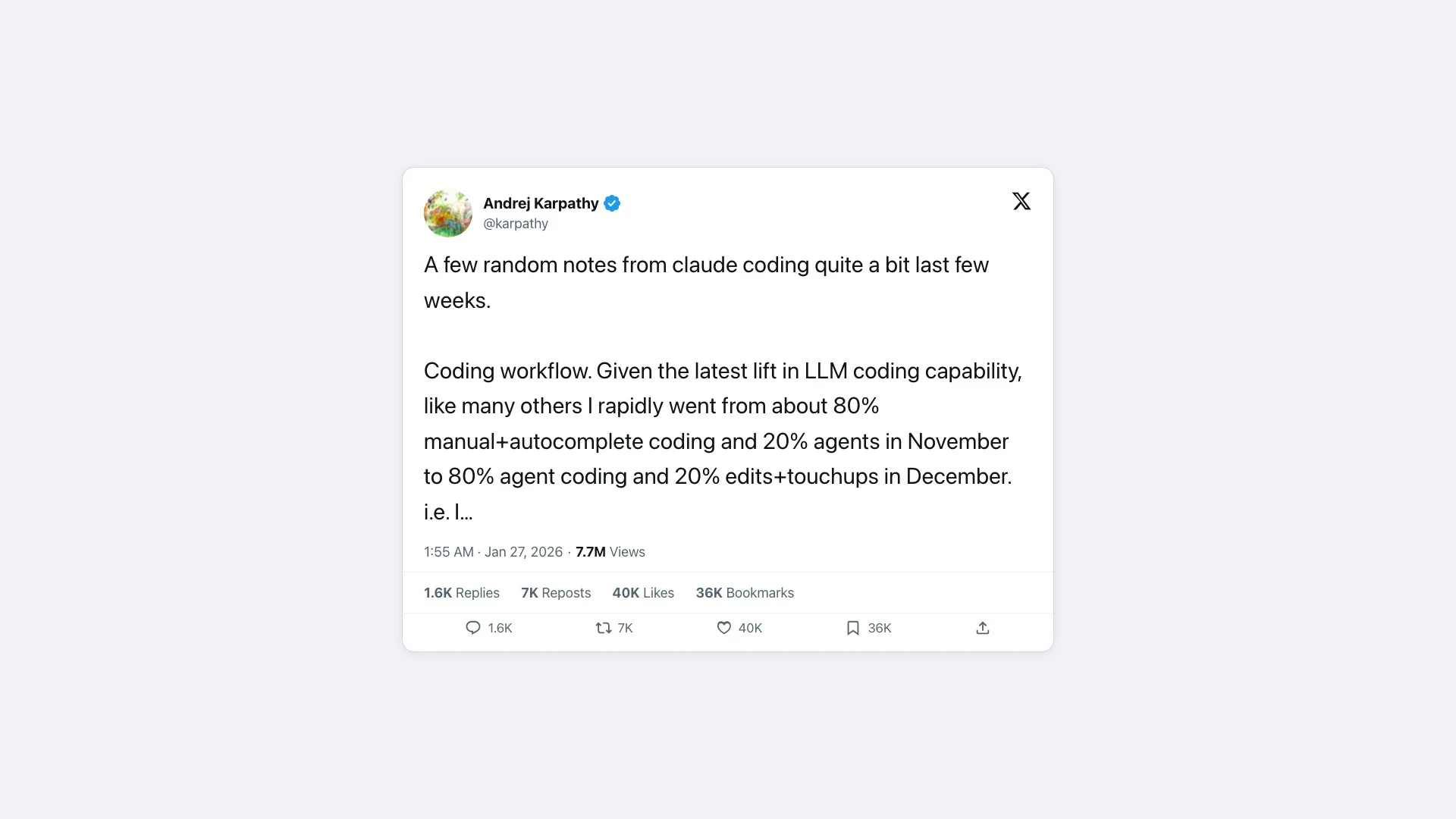 @karpathy on X, January 27, 2026
This is a sourced, hands-on comparison. Every price, benchmark, and quote links to a primary source. We compare on three axes that actually separate these tools: harness and extensibility, remote and async capability, and tokens per task. For the conceptual backbone, Firecrawl's explainer on agent harnesses is the right primer.
What is an AI coding agent?
An AI coding agent is a program that wraps a language model in a loop. It reads your codebase, plans a change, edits across files, runs commands, and checks its own work. The model supplies the reasoning. The harness supplies the tools, the permissions, and the memory.
That wrapper is where these eight tools differ most. The same model in two harnesses gives two very different results. Firecrawl's piece on why CLIs beat IDEs for AI coding covers the architectural reason.
What are the best AI coding agents in 2026?
Quick overview of the eight covered below, with each agent's standout and the trade-off to watch:
| Agent | Standout | Watch out |
|---|---|---|
| Claude Code | Deepest harness: 30 hook events, Dynamic Workflows | Heaviest token spender; Pro tier is limited |
| OpenAI Codex | One agent across CLI, cloud, app, mobile, Chrome | Mid-stream 5-hour usage-limit cuts |
| Cursor | Composer 2.5 hits 62 on Coding Agent Index at $0.07/task | Usage-based billing still trips up newcomers |
| GitHub Copilot | Cloud agent turns an issue into a PR inside Actions | Tuned for well-scoped tasks, not deep refactors |
| Google Antigravity | Agent-first IDE with parallel subagents and browser use | Rate limits are harsh even on top tiers |
| Gemini CLI | Free tier of 1,000 requests/day with GitHub Actions support | Individual free access ends June 18, 2026 |
| OpenCode | 75+ providers, local models, headless server for self-host | Quality depends entirely on the model you pick |
| Devin | Parallel autonomous agents, each in its own cloud VM | Uneven on open-ended or poorly specified work |
1. Claude Code: the deepest programmable harness
Best for: developers who want to program their own agent, not use a managed one.
Claude Code is Anthropic's agentic coding tool. It runs in the terminal, plus VS Code, JetBrains, the web at claude.ai/code, and mobile. The default model is Claude Opus 4.8, which shipped May 28, 2026, alongside Sonnet 4.6 and Haiku 4.5.
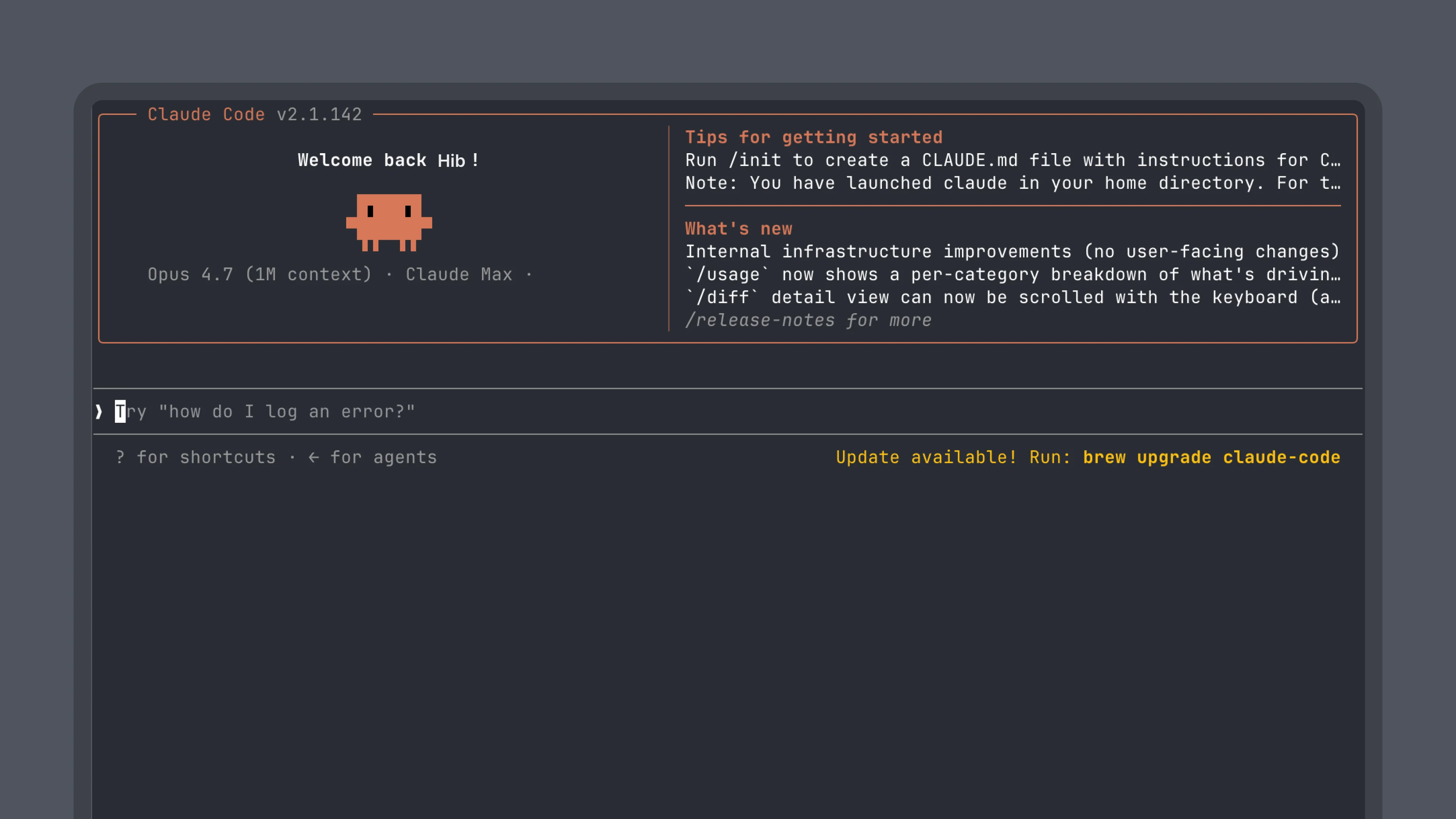 Claude Code's terminal welcome screen, running on a Claude Max plan.
Its harness is the deepest in the field. The hooks system exposes 30 lifecycle events you can script. On top sit Skills, Claude Code plugins, Subagents, and MCP.
The headline feature is Dynamic Workflows, which orchestrates tens to hundreds of parallel subagents in one session. One proof point: Bun creator Jarred Sumner used it to port roughly 750,000 lines from Zig to Rust at a 99.8 percent test pass rate in 11 days.
On accuracy it leads SWE-bench. Claude Opus 4.8 reports 88.6 percent on SWE-bench Verified, the highest published number here. It trails on terminal tasks, with 74.6 percent on Terminal-Bench 2.1.
The cost is tokens. Claude Code reads more files and plans before writing, so it spends more. One Hacker News user reported around $1,850 of API-equivalent usage in 30 days on a $100 Max plan. As of June 2026, Pro at $20 is limited; real volume starts at Max at $100.
The community sentiment is unusually one-sided. A top r/ClaudeAI thread calls it the best coding agent in the market, and it is not close.
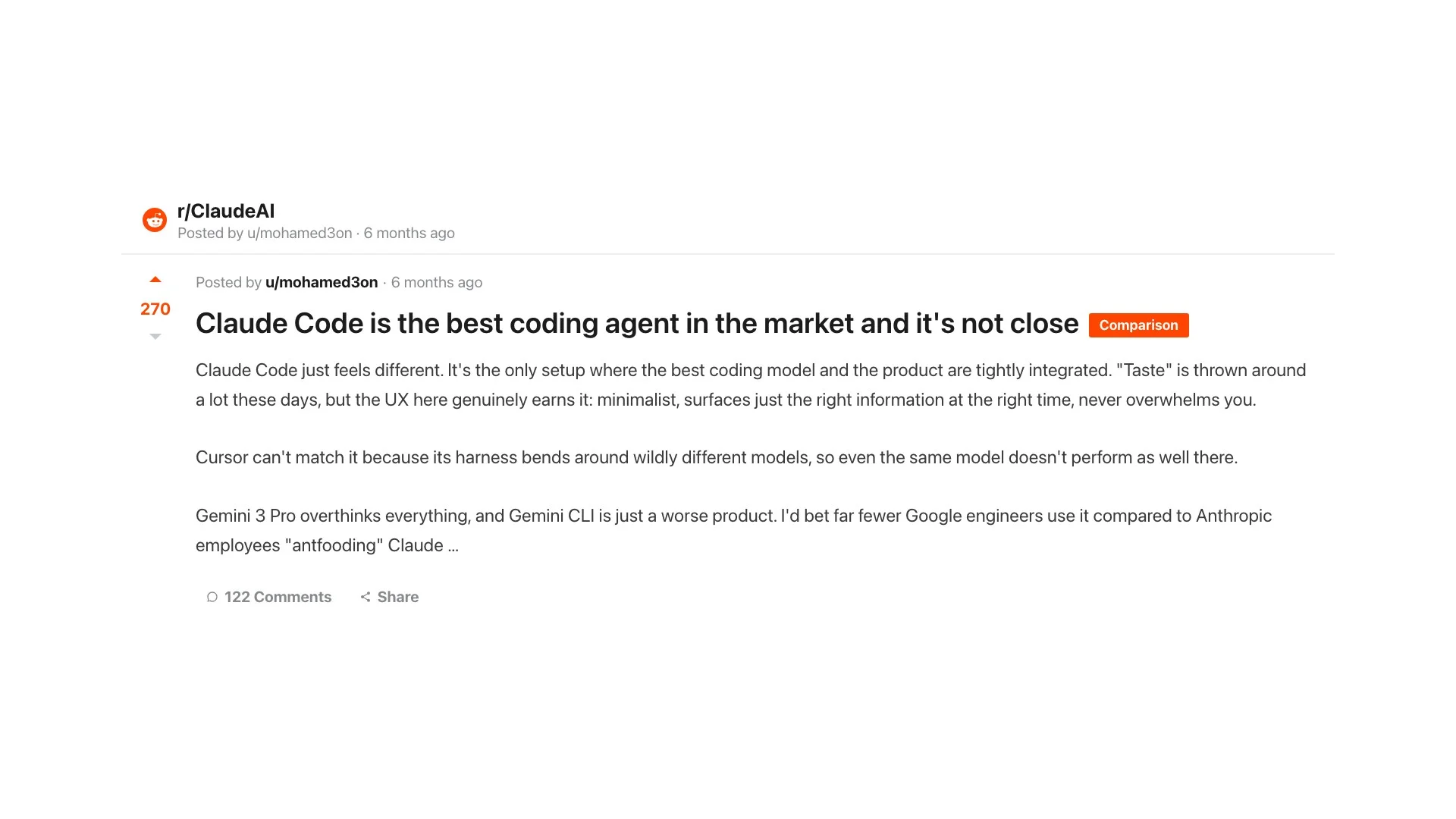 "Claude Code is the best coding agent in the market and it's not close." 270 upvotes on r/ClaudeAI. Source: reddit.com/r/ClaudeAI
Watch out: it is the heaviest token spender in this list, though systematic Claude Code token efficiency techniques can cut costs by 77–91%.
2. OpenAI Codex: one agent across every surface
Best for: moving one task across CLI, cloud, app, and mobile without losing state.
Codex is OpenAI's coding agent, an Apache-2.0 Rust binary that also runs as a cloud service, an IDE extension, a ChatGPT app, mobile, and a Chrome extension. The local default is GPT-5.5; cloud tasks and code review run on gpt-5.3-codex.
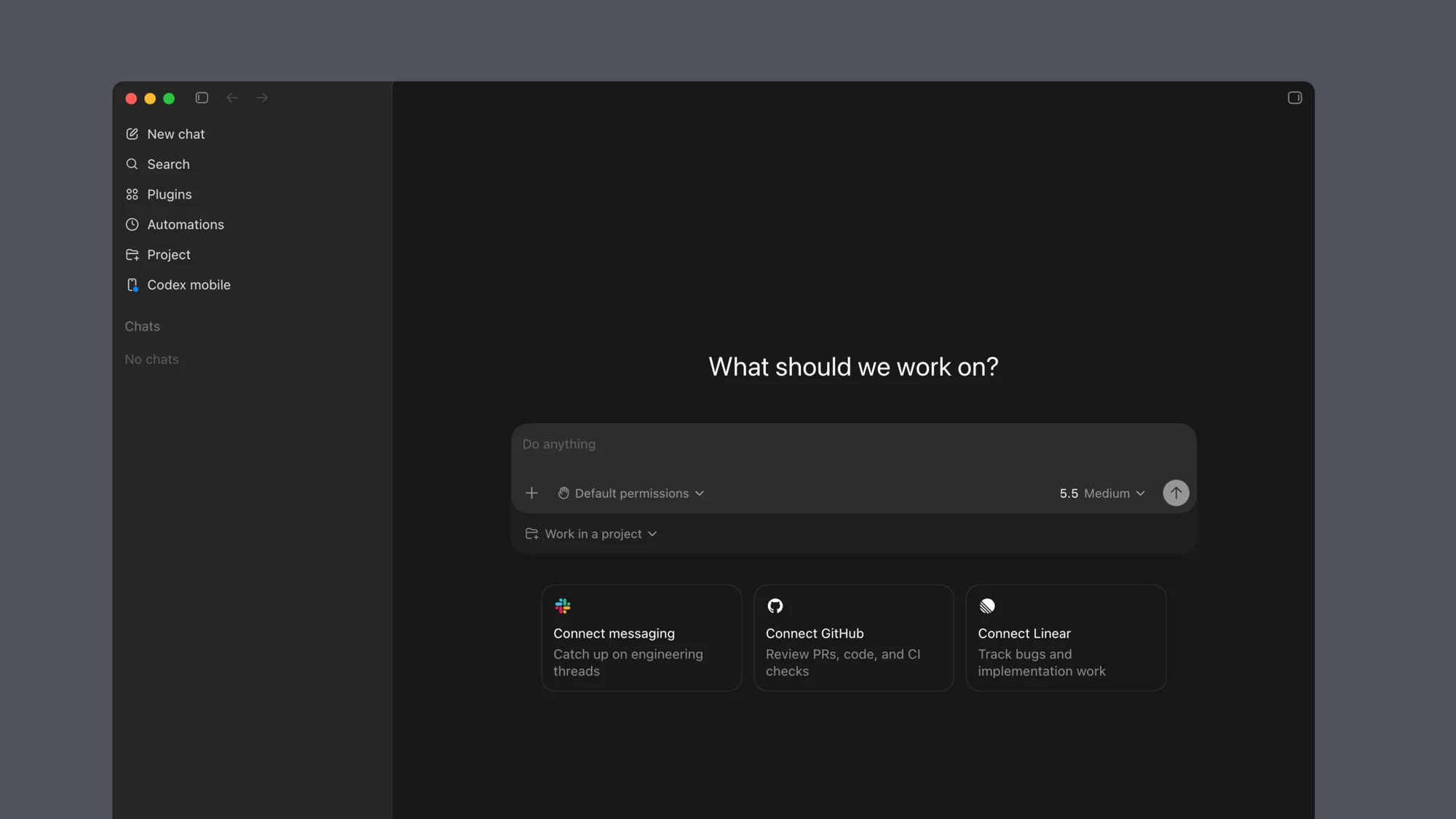 Codex's desktop app landing screen, running 5.5 Medium.
A correction worth stating plainly: Codex is no longer the bare-bones option. It now ships Skills, Codex plugins with a marketplace, Subagents, and Hooks, plus MCP over STDIO and Streamable HTTP with OAuth. Its sandbox is kernel-level, using Seatbelt, bubblewrap with Landlock, and the Windows sandbox, with network off by default.
On benchmarks, GPT-5.5 reports 82.7 percent on Terminal-Bench 2.0 and 58.6 percent on SWE-Bench Pro. Notably, Claude Opus 4.7 beats it on SWE-Bench Pro at 64.3 percent. The frontier is a tie, and which tool wins flips by benchmark.
Pricing is the draw. A new Go tier at $8 sits below Plus at $20, with Pro from $100, as of June 2026. The dominant complaint on r/codex is mid-stream usage-limit cuts. Firecrawl's guide on adding web search to Codex CLI covers the network gap.
Codex has its own loyalists, and they are vocal. One of the most-upvoted takes this spring argues that with the right skills, it is honestly better than Claude Code.
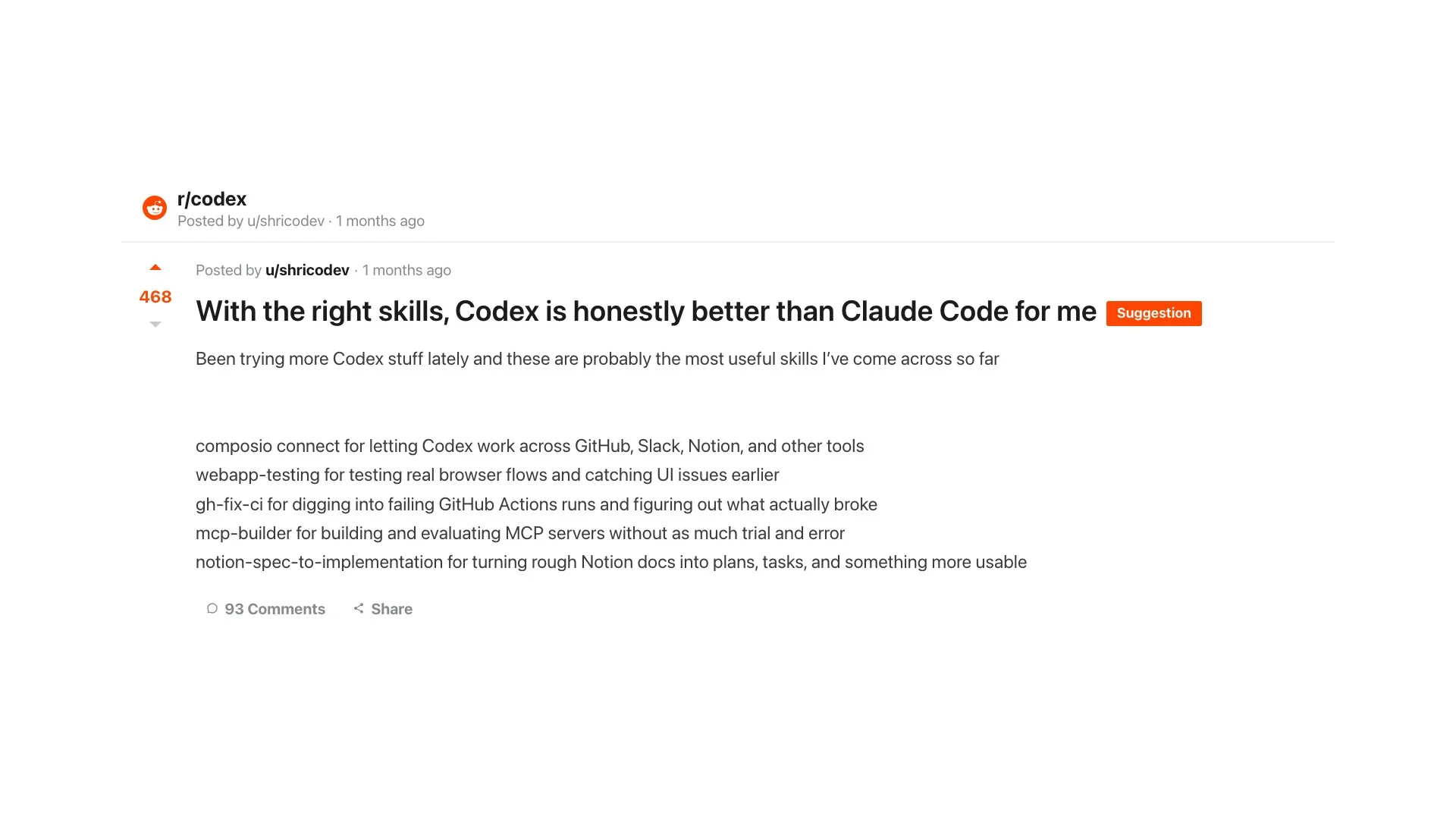 "With the right skills, Codex is honestly better than Claude Code for me." 468 upvotes on r/codex. Source: reddit.com/r/codex
Watch out: the 5-hour rolling limits bite harder than the dollar price suggests.
3. Cursor: the strongest in-editor agent
Best for: developers who want a fast, capable, low-cost agent inside their editor.
Cursor is the AI code editor from Anysphere, built as a VS Code fork. Its in-house model, Composer 2.5, shipped May 18, 2026 and is tuned for fast agentic editing, including scripted Cursor automations that string multiple tasks together. The company raised a Series D of $2.3 billion at a $29.3 billion valuation on more than $1 billion in annualized revenue.

The harness is deeper than its IDE roots suggest. Cursor ships Rules, MCP, Hooks, Skills, Plugins, and Subagents, and it reads .cursor, .claude/agents, and .codex/agents configs. For the servers most Cursor users end up plugging in, see our roundup of the best MCP servers for Cursor. The May 2026 Composer 2.5 release is what changed the verdict. Artificial Analysis scored it 62 on its Coding Agent Index, a 14-point jump over Composer 2 and third overall, behind only higher-effort Claude Opus 4.x variants.
It is also the cheapest agent above 60 on that index, at $0.07 per task on standard and $0.44 on Fast. That reframes a tool once known mostly for a pricing fight. Cursor's CEO had to apologize publicly in July 2025 over a confusing usage model. As of June 2026, plans run Free, Pro at $20, Pro+ at $60, and Ultra at $200.
Watch out: the usage-based billing improved with Composer 2.5 but can still confuse newcomers.
4. GitHub Copilot: the GitHub-native option
Best for: teams that live in GitHub and want issue-to-PR automation.
GitHub Copilot is the agent with the largest reach, since it lives inside VS Code and github.com. It is multi-model, letting you pick across Anthropic, OpenAI, and Google models from Haiku 4.5 to Opus 4.8 and GPT-5.5. Nearly 80 percent of new GitHub developers use Copilot in their first week.
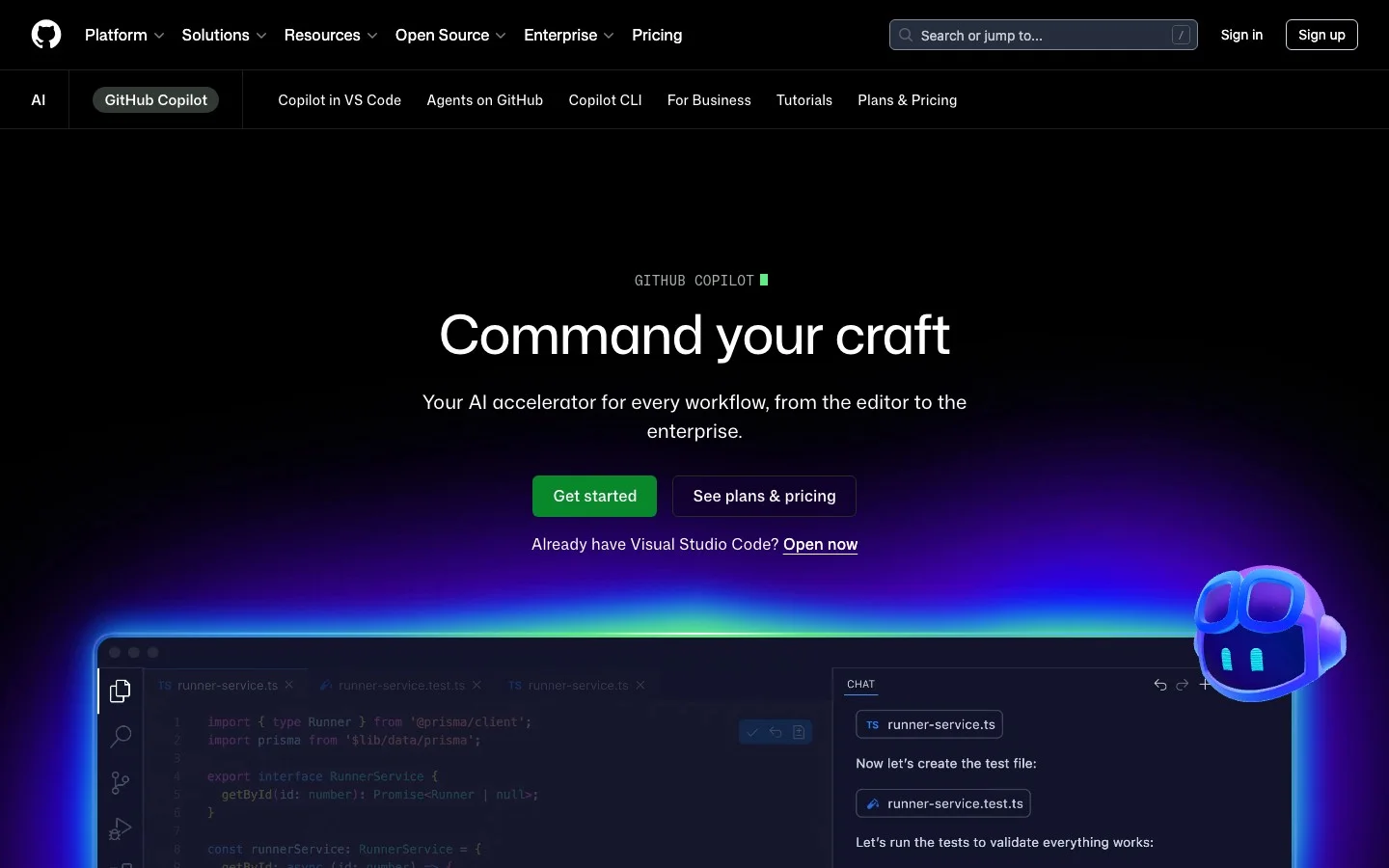
Its standout is the cloud agent. Assign it an issue and it works in an ephemeral GitHub Actions environment, then opens a pull request. Sessions cap at 59 minutes, one repo, one branch. A firewall is on by default to block data exfiltration. GitHub frames the agent as best at "low-to-medium complexity tasks in well-tested codebases," and publishes no SWE-bench score.
As of June 2026, pricing runs Free, Pro at $10, Pro+ at $39, and Max at $100, metered in GitHub AI Credits where one credit equals one cent. Code completions stay unlimited and free.
Watch out: it is tuned for safe, well-scoped tasks, not deep autonomous refactors.
5. Google Antigravity: the agent-first IDE
Best for: agent-first workflows that lean on browser use and parallel agents.
Google Antigravity launched November 20, 2025 as an agentic development platform, an IDE built around an Agent Manager surface. It runs on Gemini 3.5 Flash by default and also offers Claude Sonnet and Opus 4.6 plus gpt-oss-120b, so it is not Google-only.
It is the new center of Google's coding strategy. At Google I/O 2026 the company shipped Antigravity 2.0, an Antigravity CLI and SDK, and Managed Agents in the Gemini API. The underlying Gemini 3.5 Flash reports 76.2 percent on Terminal-Bench 2.1. No SWE-bench number is published, so do not assume one.
The scale of its multi-agent ambition is concrete. Google's agents built a working operating system that runs Doom from a single prompt, using 93 subagents and 339 million input tokens at a cost of $916.92. Antigravity is free for individuals, with usage drawn from Google AI plans. In January 2026 it also added support for Antigravity Agent Skills, so the same SKILL.md files that run in Claude Code, Codex, and Gemini CLI run here too.
The early reception has been rough, and rate limits are the flashpoint. One r/Bard thread, with 130 comments, calls them a slap in the face to paying subscribers.
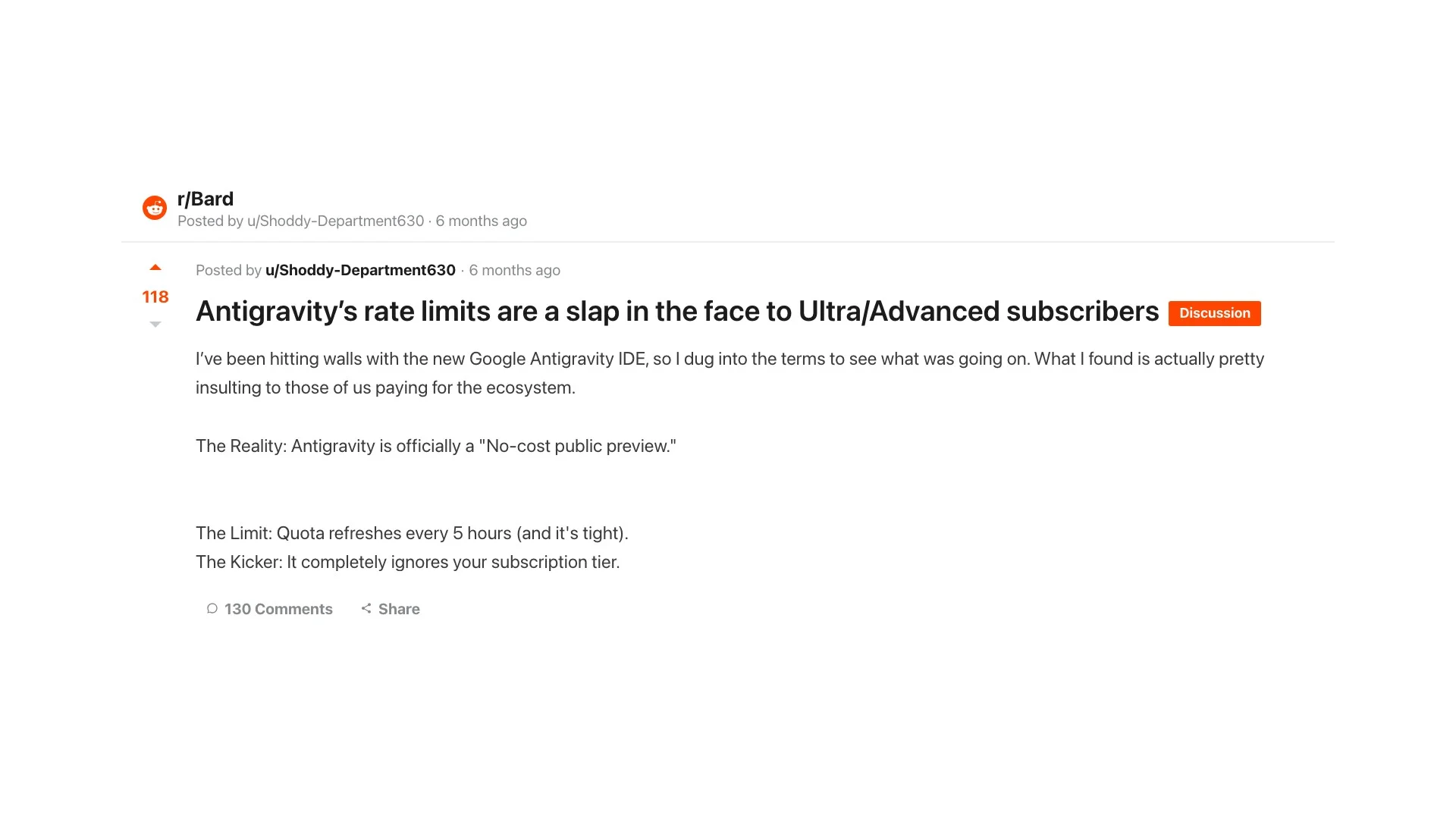 "Antigravity's rate limits are a slap in the face to Ultra/Advanced subscribers." 118 upvotes, 130 comments on r/Bard. Source: reddit.com/r/Bard
Watch out: early users report harsh rate-limit lockouts, even on the top tier.
6. Gemini CLI: free and high-volume, but sunsetting
Best for: existing free-tier users who need high request volume today.
Gemini CLI is Google's open-source terminal agent, launched June 25, 2025 under Apache 2.0. Its draw was a generous free tier: 60 requests per minute and 1,000 requests per day with a Google login. It supports MCP, GEMINI.md context files, custom commands, Gemini CLI tools via Firecrawl for live web access, and a GitHub Actions integration.
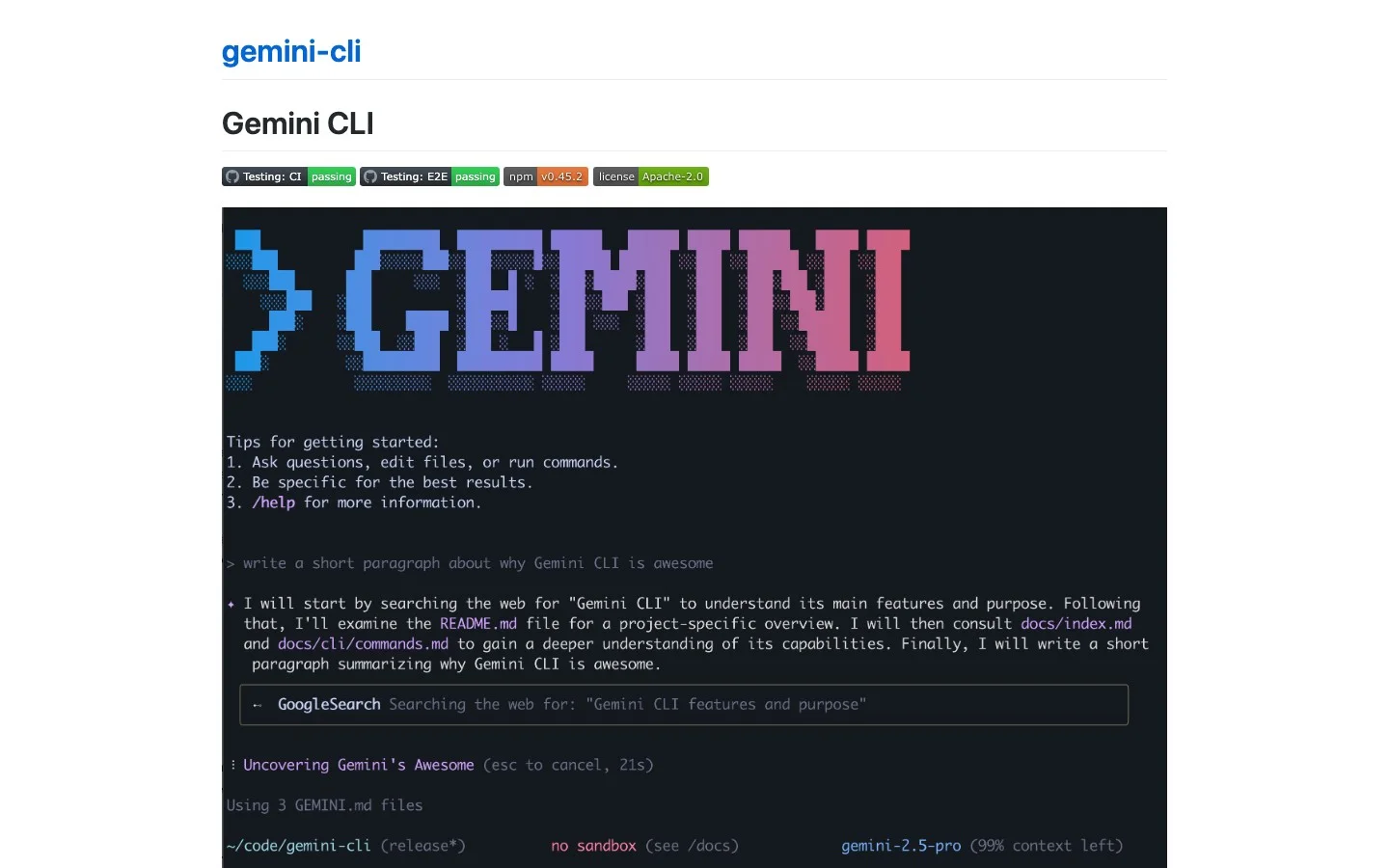
There is a catch you need to know before adopting it. Google is folding Gemini CLI into Antigravity CLI. Free and consumer access for individuals stops serving requests on June 18, 2026. Enterprise Code Assist license holders keep access.
Watch out: individual free access ends June 18, 2026. Plan a migration path.
7. OpenCode: model-agnostic and open-source
Best for: developers who want to own their stack, run local models, or self-host.
OpenCode is an open-source, MIT-licensed terminal agent now maintained by Anomaly, the org formerly known as SST. It has over 171,000 GitHub stars (one of the trending GitHub repositories worth watching in 2026) and 1.68 million weekly npm downloads as of June 2026. It is model-agnostic across 75-plus providers, including local models.
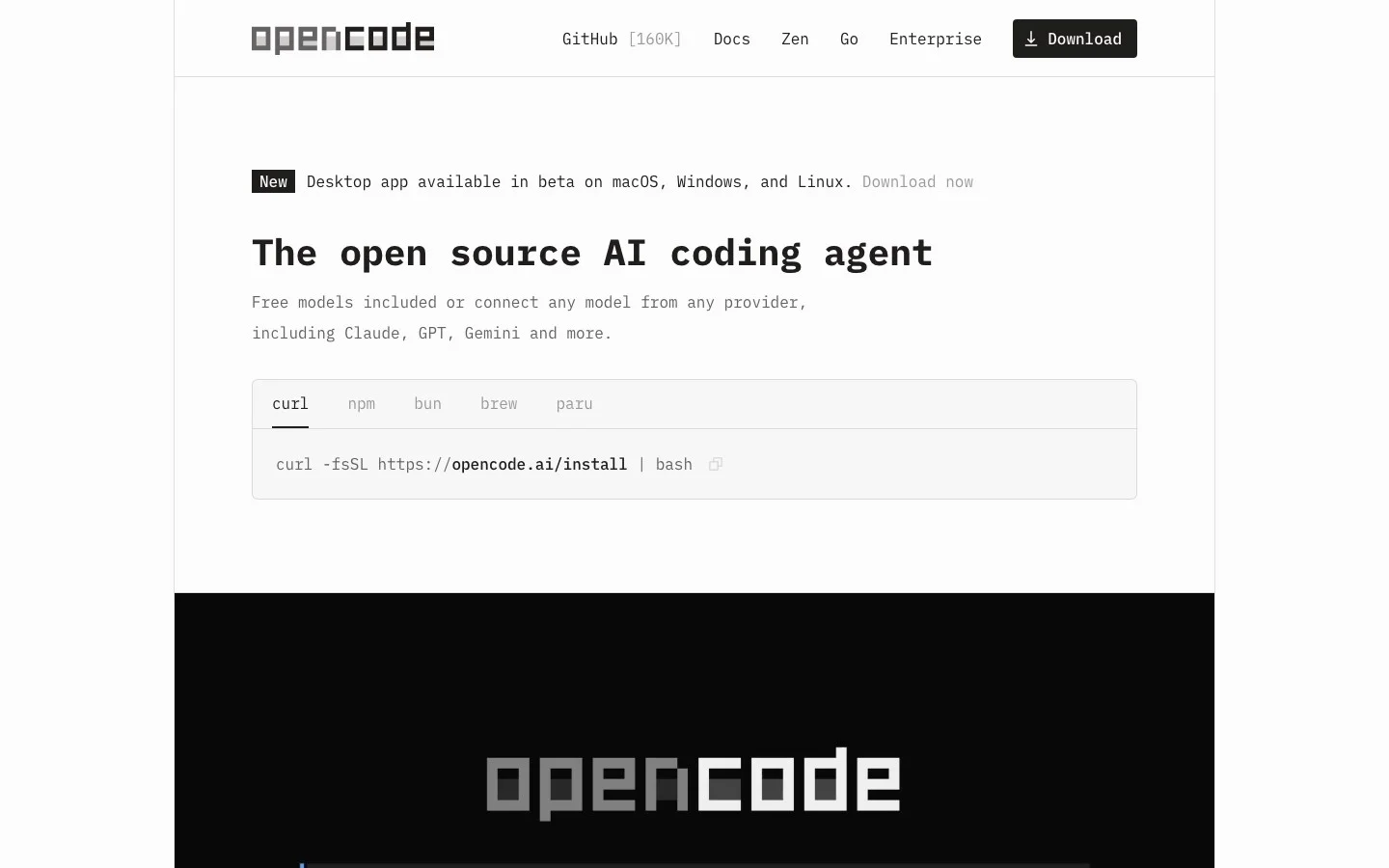
Its harness is genuinely deep. You get custom primary agents and subagents defined in JSON or markdown, each with its own model and permissions, plus MCP, AGENTS.md, LSP support, and OpenCode skills that share the same SKILL.md standard as Claude Code and Codex. The architecture is client-server: opencode serve runs a headless OpenAPI server for async and remote use. One caveat: Anthropic prohibits Claude Pro and Max subscriptions in OpenCode, so Claude works only via API key. Firecrawl's Claude Code vs OpenCode comparison covers that managed-versus-open tradeoff in depth.
OpenCode has a genuine cult following. Users keep posting that its terminal experience beats the bigger, better-funded names.
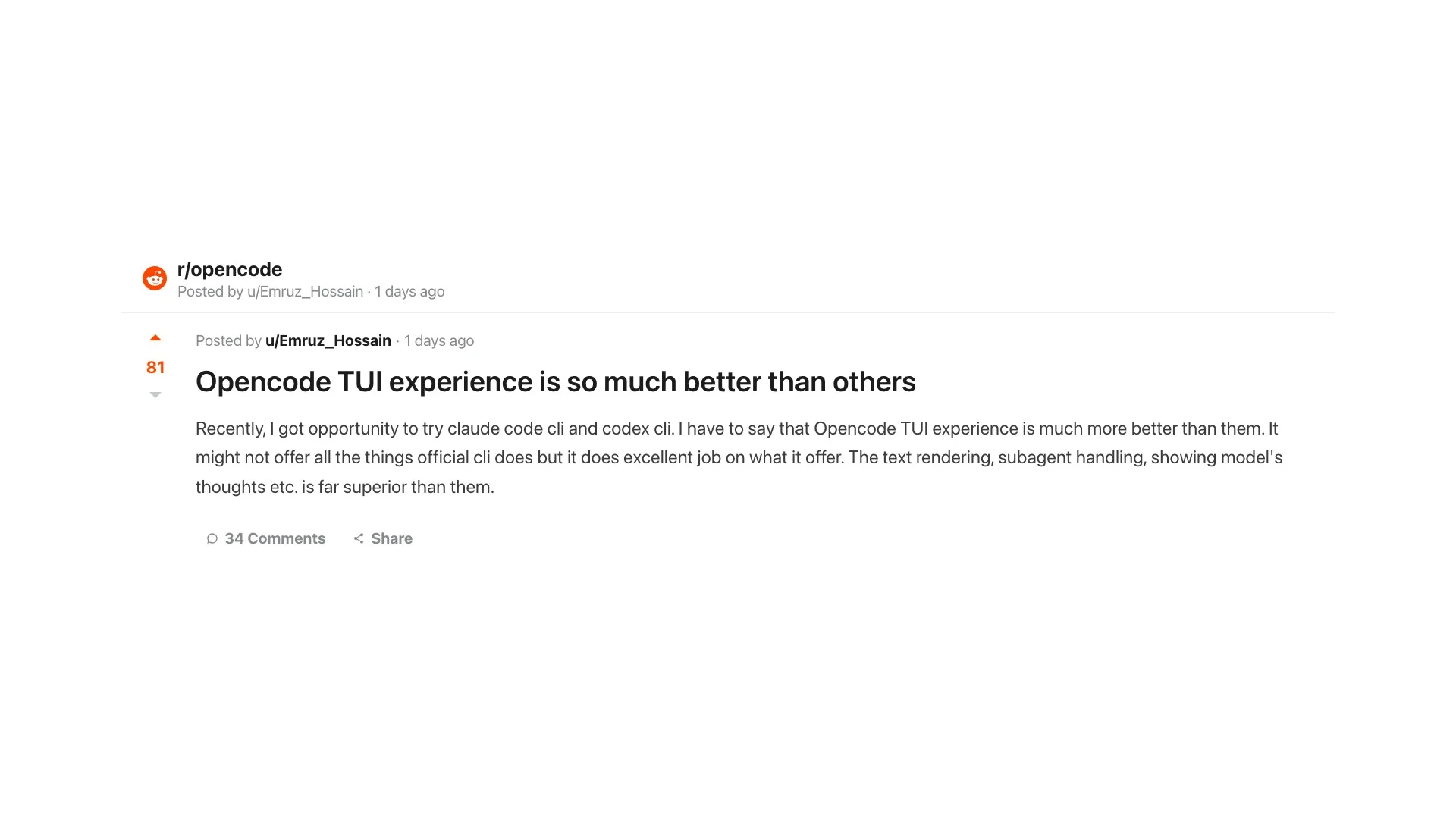 "Opencode TUI experience is so much better than others." 81 upvotes on r/opencode. Source: reddit.com/r/opencode
Watch out: benchmark quality depends entirely on the model you point it at.
8. Devin: the autonomous software engineer
Best for: delegating well-scoped backlog tasks to run without supervision.
Devin by Cognition is the purest autonomous agent here. You delegate a task, and parallel "Managed Devins" each run in their own isolated cloud VM, opening pull requests when done. Cognition reports a 67 percent PR merge rate, up from 34 percent a year prior, and says Devin writes 89 percent of its own commits.
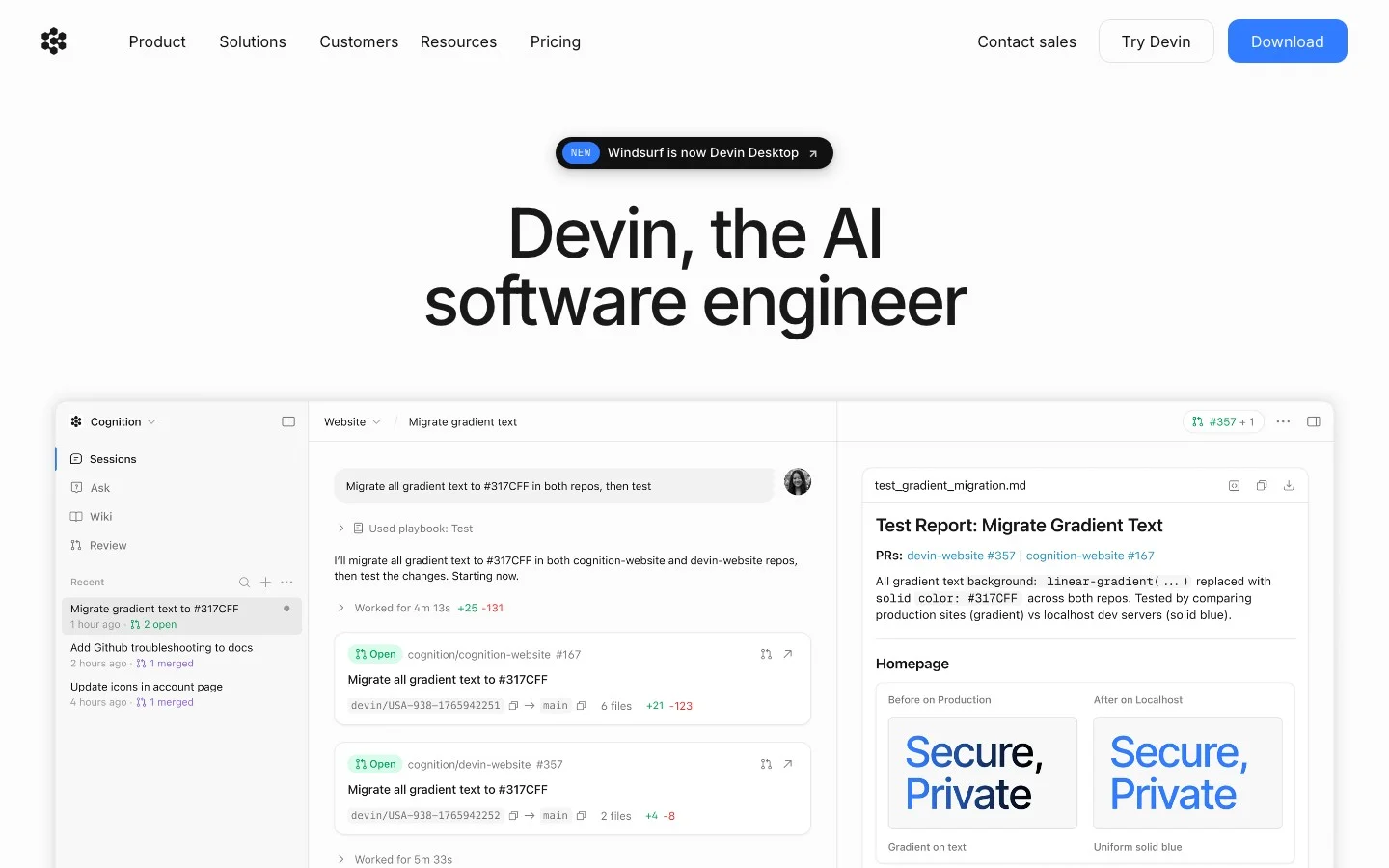
Devin earned skepticism early. Its original SWE-bench score was 13.86 percent unassisted, and a widely cited Answer.AI trial logged "14 failures and just 3 successes" across 20 tasks. The product has matured since. Devin 2.0 dropped the entry price to $20, and Cognition's acquisition of Windsurf added an IDE, now Devin Desktop.
As of June 2026, pricing runs Free, Pro at $20, Max at $200, and Teams from an $80 monthly minimum, metered in Agent Compute Units.
Watch out: results are uneven on open-ended or poorly specified work.
Other AI coding agents worth knowing
The eight above sit at the current frontier, but a few more come up often when readers ask "which agent should I use for X?" They matter for specific workflows the frontier tools do not cover as cleanly.
9. Aider: the git-first terminal option
Aider is an Apache-2.0 CLI agent built around Git. It maps the repo, uses git blame to focus on recently changed code, and auto-commits successful edits with descriptive messages so review and rollback stay clean. It is model-agnostic: pair a strong reasoning model for planning with a cheaper one for edits. No IDE layer, no inline autocomplete, just a diff-review loop. Best for OSS contributors and terminal engineers who want a lean, git-native agent without a subscription.
10. Continue: open-source, inside your existing editor
Continue is an Apache-2.0 extension for VS Code and JetBrains, so you can add an agent to the editor you already have instead of switching to Cursor or Antigravity. It combines chat, inline edit, agent, and autocomplete in one package, with MCP support and BYO models (hosted, local via Ollama, or your own API key). The Team plan runs $20 per seat per month, and local model usage costs nothing. Best for privacy-conscious teams that want an open-source stack inside a mainstream IDE.
11. Windsurf: now folded into Devin Desktop
Windsurf was the standout agentic IDE of 2025, built around Cascade, a multi-file agent that indexes the workspace and iterates on failing tests. Cognition acquired it and rebuilt it as Devin Desktop, a local IDE surface for the same Devin engine covered above. Existing Windsurf users get their roadmap through the Devin brand.
12. Sourcegraph Cody and Amp: cross-repo search first
Sourcegraph Cody uses the Sourcegraph code graph to reason across many repositories at once, useful when a change ripples through a service mesh or a large monorepo. Sourcegraph ended Cody's Free and Pro individual plans in 2025 and moved solo developers to Amp, a lighter agent from the same team. Enterprise Cody starts at $19 per user per month, or $16,000 per year for the bundled deployment. Best for teams whose primary bottleneck is finding relevant code, not writing it.
13. Tabnine: enterprise, on-prem, air-gapped
Tabnine is the pick when deployment rules matter more than model choice. It runs on-prem, in a VPC, or fully air-gapped, with SOC 2 compliance, zero code retention, and IP indemnification on enterprise plans. Autocomplete and chat live in your IDE; the Agentic Platform tier adds governed refactoring and test generation. Best for regulated industries (finance, healthcare, defense) where cloud agents are not an option.
How do the harnesses and extensibility primitives compare?
The harness decides how far you can bend the agent to your workflow. Here is where the extensibility primitives line up. The headline is convergence: the gap between the top tools narrowed sharply in 2026.
| Primitive | Claude Code | Codex | Cursor | Copilot | OpenCode |
|---|---|---|---|---|---|
| MCP servers | Yes | Yes | Yes | Yes | Yes |
| Config file | CLAUDE.md | AGENTS.md | .cursor + AGENTS.md | instructions.md | AGENTS.md |
| Hooks | Yes (30 events) | Yes | Yes | Yes | Per-tool perms |
| Skills | Yes | Yes | Yes | Yes | Compatible |
| Plugins | Yes | Yes (marketplace) | Yes | Yes | Via config |
| Subagents | Yes | Yes | Yes | Yes | Yes |
| Multi-agent orchestration | Dynamic Workflows | Cloud tasks | Cloud Agents | Cloud agent | Custom agents |
Claude Code still leads on raw depth, especially with Dynamic Workflows. But Codex and Cursor closed most of the distance. The old claim that only Claude Code has Skills and Hooks is now wrong. For specific extensions, see Firecrawl's Best Claude Code Skills and Agent Skills explainer.
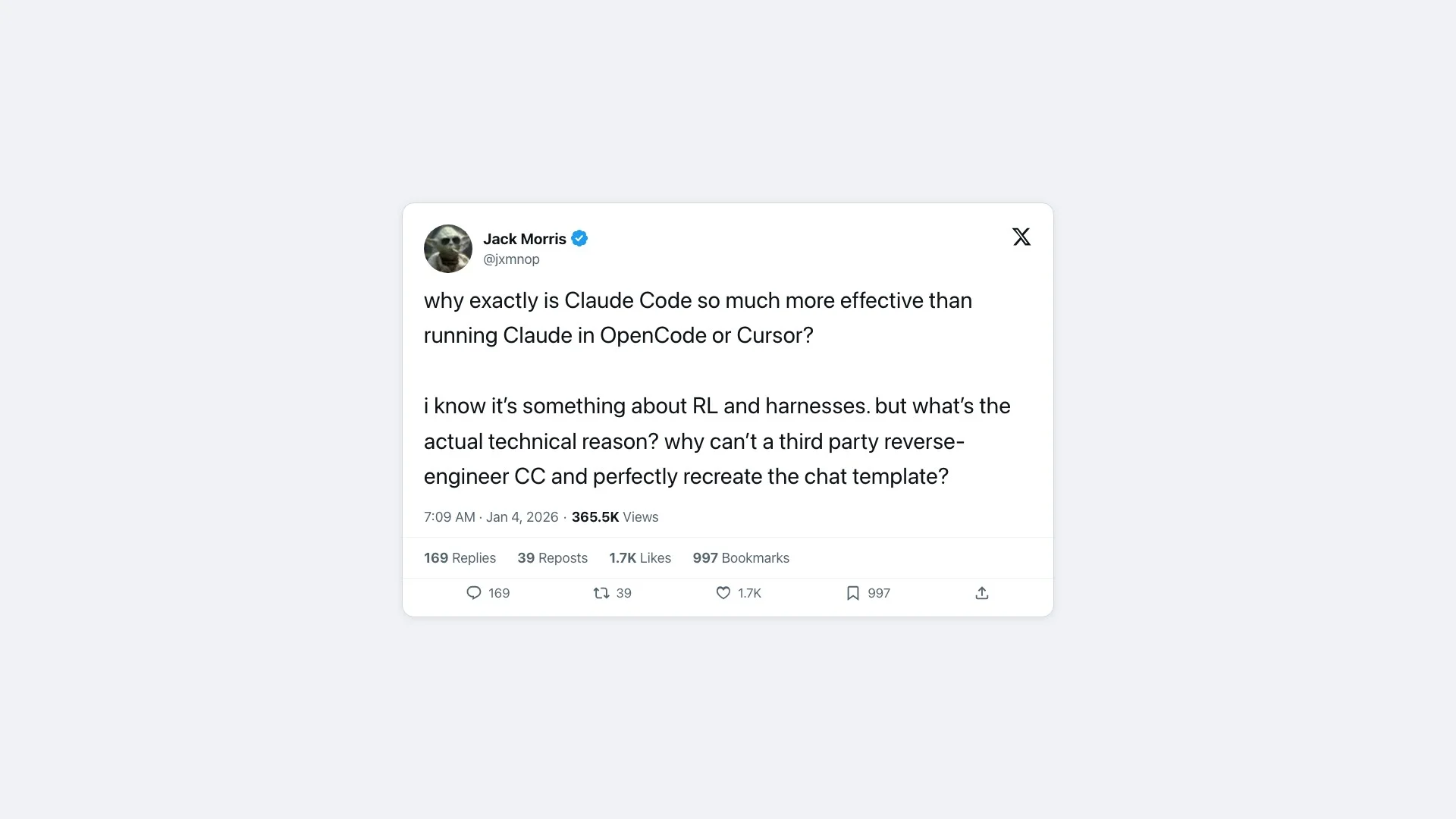
This is also why the same model feels different across tools. Researcher Jack Morris put the question directly, and the answer is the harness.
Which agents work remotely or asynchronously?
The newest frontier is the agent you do not watch. Instead of pairing in a terminal, you hand off a task and it runs in a cloud VM for minutes or hours.
Four tools do this well. Codex Cloud runs hosted sandboxed tasks and reviews PRs with @codex review, and its local CLI supports parallel coding agents through git worktrees. Cursor's Cloud Agents run in isolated VMs, triggerable from Slack, GitHub, or mobile. GitHub's cloud agent turns an issue into a PR inside Actions. Devin is the most autonomous, running many agents in parallel.
The design assumption is shared. The bottleneck is no longer what an agent can do. It is how many you can direct and review at once. Claude Code answers this differently, with Routines for cron and GitHub triggers layered on a terminal-first product.
What does each agent cost you in tokens?
Plan price is the visible number. Tokens per task is the one that decides whether you stay inside your limits.
Claude Code is the heaviest spender. Community head-to-heads put it at roughly 3 to 4 times Codex on the same task, because it reads more files and plans before editing. That premium buys more thorough work, but it adds up fast on a metered plan.
Browser-use founder Gregor Zunic captured the trade-off after a day back on Claude Code: burned limits, worse output, back to Codex.

Autonomy at scale gets expensive quickly. Google's Doom-OS demo burned 339 million input tokens for $916.92 in one run. Devin meters in Agent Compute Units, while Copilot uses AI Credits and keeps completions free. If you run an agent eight hours a day, model these numbers before you commit.
Which AI coding agent is most accurate?
Read coding agent benchmarks as vendor-reported and version-specific. Terminal-Bench 2.0 and 2.1 are not interchangeable, and harness choice changes the result. Treat the frontier as a tie.
| Benchmark | Agent / model | Score | Source |
|---|---|---|---|
| SWE-bench Verified | Claude Opus 4.8 | 88.6% | Anthropic |
| Terminal-Bench 2.1 | Claude Opus 4.8 | 74.6% | Anthropic |
| Terminal-Bench 2.1 | GPT-5.5 (Codex harness) | 83.4% | Anthropic |
| Terminal-Bench 2.0 | GPT-5.5 | 82.7% | OpenAI |
| SWE-Bench Pro | GPT-5.5 | 58.6% | OpenAI |
| SWE-Bench Pro | Claude Opus 4.7 | 64.3% | OpenAI |
| Terminal-Bench 2.1 | Gemini 3.5 Flash | 76.2% | |
| Terminal-Bench 2.0 | Cursor Composer 2 | 61.7% | Cursor |
Claude leads SWE-bench Verified. Codex leads Terminal-Bench. The lesson underneath is that the same model scores differently in different harnesses, which is exactly why the wrapper matters as much as the model.
Which AI coding agent should you use?
Match the tool to the job.
- Programmable terminal depth: Claude Code. Nothing else matches Dynamic Workflows and 30 hook events.
- Cross-surface continuity at low cost: Codex. One account across CLI, cloud, app, and mobile from $8.
- Fast in-editor coding: Cursor. The agent and editor share one loop.
- GitHub-native teams: Copilot. Issue-to-PR automation where your code already lives.
- Multi-agent and browser tasks: Google Antigravity, free for individuals.
- Model-agnostic or self-hosted: OpenCode. Bring any model, run it headless.
- Hands-off delegation: Devin. Parallel autonomous agents that open PRs.
- Beginner-friendly: GitHub Copilot or Cursor. Lowest setup friction, inline suggestions, familiar IDE.
- Regulated or air-gapped: Claude Code Enterprise for HIPAA and SCIM, Tabnine for on-prem and air-gapped, or OpenCode with a local model when nothing can leave your hardware.
- Git-first CLI on a budget: Aider. Auto-commits, diff review, pay only for the model.
Most heavy users run two or three and route work by task type. Before you commit, run your top two picks on a repo you actually ship. A single day of real work reveals more than any benchmark table. Firecrawl's Claude Code vs Codex deep-dive covers the most common pairing.
How do you give any of these agents live web data with Firecrawl?
Here is a gap every agent on this list shares. Out of the box, none can see the live web. Codex CLI ships with internet disabled in its sandbox. Claude Code's WebFetch is a single-URL primitive, not real search. Yesterday's library release is invisible to a model trained months ago.
Because nearly all of them speak MCP, the fix is the same everywhere. A Firecrawl MCP server gives the agent search and scrape, so it pulls clean, current context before it writes code. Firecrawl's piece on agentic search explains why cached training data is not enough, and our guide on up-to-date documentation for AI coding agents walks through the docs-specific pipeline.
One command installs it across every coding agent on your machine, with no manual config:
npx -y firecrawl-cli@latest init --all --browserTry it free at firecrawl.dev. For the wider ecosystem, see Firecrawl's 10 Best MCP Servers for Developers in 2026.
Why is the harness the choice now?
The model race ended in a tie at the top. What separates these eight agents is the harness, the surfaces, and the token bill. Pick the workflow you want to live in, then pick the agent that bends to it. The smartest model is the one wrapped in the loop that fits how you actually work.
Frequently Asked Questions
What is the best AI coding agent in 2026?
There is no single best AI coding agent. Claude Code has the deepest programmable harness. Codex spans the most surfaces at a low entry price. Cursor is the strongest in-editor agent. Devin is the most autonomous. The right pick depends on whether you optimize for terminal depth, cross-surface continuity, in-editor speed, or hands-off delegation.
Which AI coding agent is most accurate?
On SWE-bench Verified, Claude Opus 4.8 reports 88.6 percent, the highest published figure among these agents. On Terminal-Bench 2.1, GPT-5.5 in the Codex harness reports 83.4 percent, ahead of Claude. Benchmarks are vendor-reported and use different versions, so read them as a tie at the frontier rather than a ranking.
Which AI coding agent uses the fewest tokens?
Codex is consistently leaner than Claude Code on tokens per task. Community head-to-heads put Claude Code at roughly 3 to 4 times the token use of Codex on the same work. For a self-contained refactor with no tool calls, the gap narrows.
What is the best AI coding agent for autonomous or background work?
Devin is built for fully autonomous runs, with parallel agents each in their own cloud VM. Codex Cloud, Cursor Cloud Agents, and GitHub Copilot's cloud agent also run async and open pull requests. Claude Code added Routines for cron and GitHub triggers.
Are there free AI coding agents?
Yes. OpenCode is open-source and free, you pay only for the model API you choose. Google Antigravity is free for individuals. Gemini CLI had a free tier of 1,000 requests per day, but free access for individuals ends June 18, 2026 as it transitions to Antigravity CLI.
Do AI coding agents support MCP?
Nearly all of them do. Claude Code, Codex, Cursor, GitHub Copilot, Gemini CLI, OpenCode, and Devin all support the Model Context Protocol. That means an MCP server like Firecrawl works across all of them with the same setup.
What is the difference between a CLI coding agent and a remote coding agent?
A CLI coding agent runs locally in your terminal and edits files on your machine in a tight feedback loop. A remote or async coding agent runs in a hosted cloud VM, works unattended for long stretches, and opens a pull request when it finishes. Many tools now offer both modes.
Can AI coding agents access the live web?
Not by default. Most run with network access off or limited to a single fetch. Codex CLI ships with internet disabled in its sandbox. Adding a Firecrawl MCP server gives any MCP-capable agent live search and scrape, so it can pull current docs before it writes code.
Which AI coding agent is best for beginners?
GitHub Copilot is the easiest starting point. It works inside VS Code and JetBrains, needs no configuration beyond a sign-in, and the free tier gives 2,000 completions and 50 chat requests per month. Cursor is the next step up when you want an agent-first editor without leaving VS Code's ergonomics. Both surface suggestions inline, so the learning curve is shorter than a terminal agent.
Which AI coding agent works for regulated or air-gapped teams?
Claude Code offers enterprise controls including HIPAA readiness, SCIM provisioning, and IP allowlisting. Tabnine supports on-prem, VPC, and air-gapped deployment with SOC 2 compliance and zero code retention. OpenCode with a local model like Llama or Qwen served through Ollama keeps every token on your own hardware. The right pick depends on whether you need managed enterprise controls, private deployment, or full self-hosting.