TL;DR: Best AI Sales Automation Tools for GTM
- Claude Code: Vibe-code your entire internal GTM stack in under a day
- Cursor Automations: Ship AI workflows to the cloud with one toggle
- Firecrawl: The web data layer every AI SDR and enrichment step depends on
- Clay: Waterfall enrichment and signal-based prospecting
- AiSDR: Autonomous AI SDR that researches, writes, and follows up
- HeyReach: LinkedIn outbound at agency scale
- Octolens: AI social listening across Reddit, X, HN, LinkedIn
- Supademo: Agentic interactive product demos
- Superhuman: Email and calendar productivity, now AI-native
- Reo.dev: Developer intent capture and dev-audience deanonymization
Every revenue team I've talked to this year is quietly rebuilding their stack. The old shape (Salesforce plus Outreach plus a data provider plus a sales engagement tool) is losing to something looser: a data layer, an execution layer, an intelligence layer, and increasingly a fourth layer where teams stop paying for seat-based SaaS and vibe-code their own internal tools instead.
The upside is real. AI can increase sales productivity by up to 40% and reduce sales cycles by up to 25%, which is why every serious GTM team is now rebuilding around it instead of bolting it on.
That fourth layer is the interesting one. When Anthropic and OpenAI keep dropping models that can spin up a CRUD app end-to-end, "we'll just build it" stops being a joke and starts being a line item.
Why sales and GTM teams need to be more AI-savvy today
You can see it in how tech companies are hiring. The best sales orgs aren't looking for classic salespeople anymore. They're looking for sales engineers and growth engineers: people who can write a Python script, wire an API, and vibe-code a dashboard on the same afternoon they close a deal.
Elena Verna, Head of Growth at Lovable, made a version of this point in her post on why AI startups are blowing past traditional benchmarks: AI-native companies aren't just using AI in the product. They use AI across product, growth, marketing, and ops, which lets them ship and iterate faster.
That creates compounding advantage. Small teams can do what used to require huge orgs. As she puts it, at Lovable she's seen work ship in days or weeks that she's used to seeing take quarters or years.
Her other point lands even harder for GTM: the old split where core product builds features and growth distributes them breaks in AI-native companies. Growth now ships features. Sometimes the feature is the growth loop itself. Sometimes it's just table stakes to keep up with user expectations.
Which means the growth skillset is shifting too:
- Invent new loops
- Launch new product surfaces
- Test emerging channels
- Understand AI-native workflows
- Build with AI directly
- Connect product usage to monetization
The Firecrawl Deployment team runs this way. They built an internal clone of HubSpot with Claude Code so the CRM matches the actual pipeline instead of forcing the pipeline to match HubSpot's data model. It's super cool. It's also the direction most technical GTM teams are heading in 2026, and the buy-versus-build question is now buy-and-build for almost every layer.
These are the best AI sales automation tools for GTM I'd hand someone rebuilding their revenue stack today. Some are commercial products doing one thing well. Some are the ingredients to build the rest yourself. All ten are things I've either used or watched a revenue team ship real work with.
What counts as an AI sales automation tool in 2026?
The category has widened. Five years ago it was "email sequencer with variables." Now it covers everything from AI automations for business workflows to full autonomous agents:
- Data layer: web scraping, search, enrichment, and signal capture (Firecrawl, Clay, Reo)
- Execution layer: AI SDRs, LinkedIn outbound, cadence agents (AiSDR, HeyReach)
- Intelligence layer: social listening, buyer prediction, call intelligence (Octolens, Reo)
- Productivity layer: email, calendar, notes with real AI inside (Superhuman)
- Demo layer: interactive and agentic product tours (Supademo)
- Custom layer: dev tools that make it cheap to build the rest yourself (Claude Code, Cursor)
The winning stacks pick one tool per layer, wire them together with something like a Firecrawl-powered agent, and use Claude Code to fill any gap a commercial tool doesn't cover well. That is the shape this list is optimized for.
How these AI sales automation tools for GTM were evaluated
Most of this list came from getting on the ground and actually trying tools, then comparing notes with the best revenue, sales, and GTM teams inside AI-first startups on what they run every day and what they've quietly ripped out. Every tool that made the cut was checked against four things:
- Use case: a clear job it wins at, not a vague "does everything" pitch
- Value: real output relative to the setup cost and time to first result
- Pricing: cost that holds up as usage scales, not just at the entry tier
- First-hand reviews: from teams running it in production right now, not analyst rankings
1. Claude Code
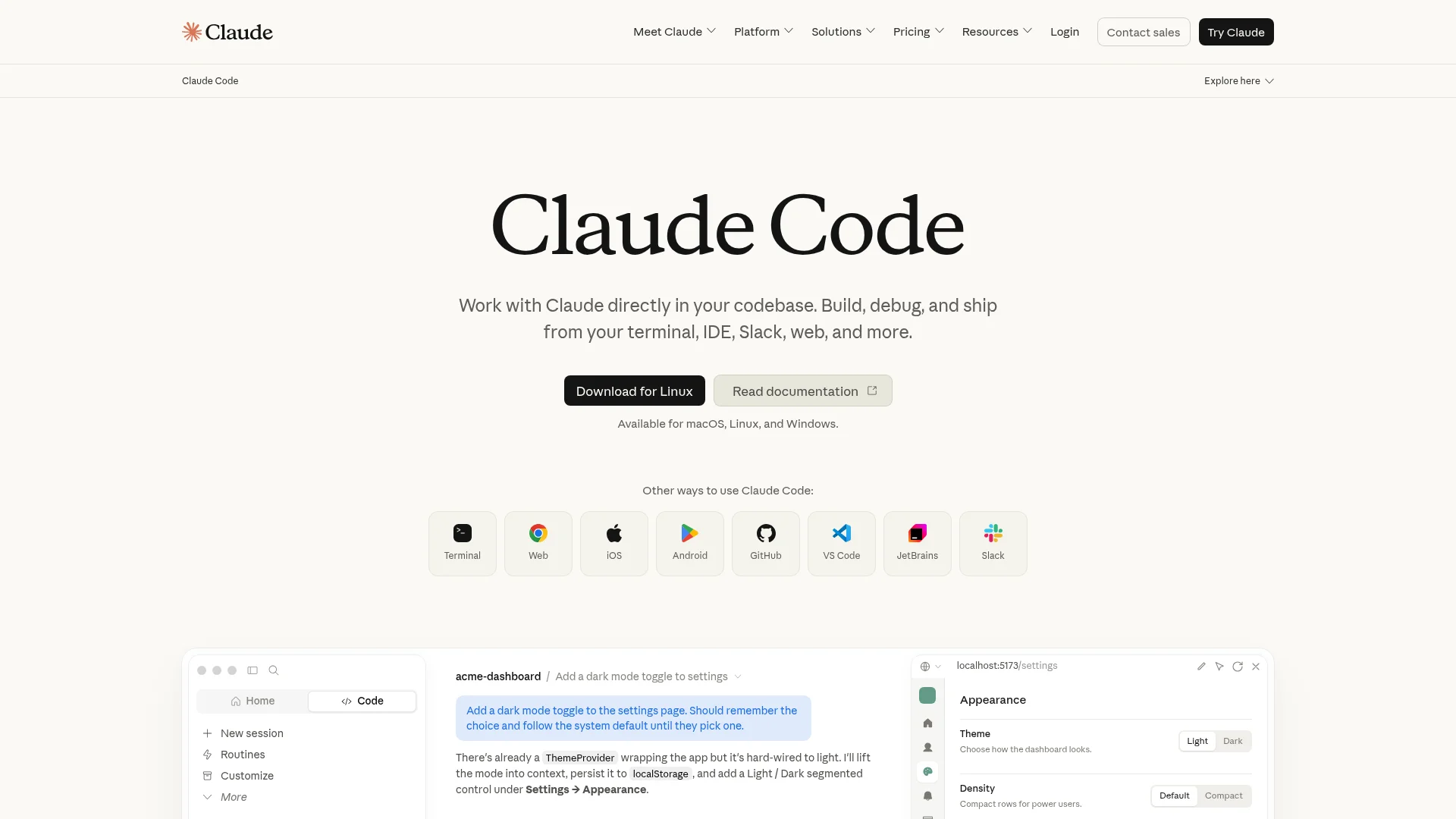
Claude Code is Anthropic's agentic CLI that turns Claude into a coding partner living inside your terminal, IDE, or web app.
If you have Claude Code, you can vibe-code almost any tailored SaaS tool for your specific revenue motion in less than a day. That is not marketing.
The Firecrawl Deployment team built a clone of HubSpot internally so we could tailor the CRM according to our specific business requirements: the fields we actually use, the pipeline stages that match how we sell, the automations that fit our motion. No seat cost, no data migration, no waiting on a product roadmap.
Layer something like Haystack on top and you can take these internal projects to the next level with real deployment and multi-user access.
Pair that with a private knowledge layer like Stack Overflow Internal, where every playbook, objection handler, and pricing edge case lives as a searchable Q&A, and you have a genuinely powerful engine: custom internal tools on one side, the institutional knowledge that makes them useful on the other.
agentic coding: Runs multi-step edits across a repo, reads and writes files, executes commandsplugins and skills: Loadable playbooks for GTM-specific workflows (see our post on the best Claude Code skills)MCP support: Plug in Firecrawl, Linear, Notion, HubSpot, or any of the best MCP servers for developers as a toolterminal-native: Lives inside iTerm or your IDE, no context switchsub-agents: Fan out research or migration work to parallel agents
Install:
npm install -g @anthropic-ai/claude-codeExample:
# The kind of GTM prompts revenue teams actually run
"Build a Next.js CRM that matches this schema and connects to Postgres."
"Scrape yesterday's HN launches, score them against our ICP, and draft outbound."
"Take the CSV of deals and generate a personalized recap email per account."
Honest take: The unlock isn't the code, it's the confidence to stop paying for something you could build in an afternoon. I've watched a two-person revenue team stand up an internal deal-desk tool between a Monday standup and a Wednesday demo. The cost was tokens and a Vercel deploy.
Cons: Someone on the team has to be comfortable in a terminal. A non-technical revenue lead can drive a lot with Claude Code, but the first time an agent breaks something in prod, you want an engineer nearby. And every internal tool you build is a tool you now maintain: when your pipeline stages change, or a vendor API version-bumps, the fix is on you, not a support ticket.
Reference: claude.com/product/claude-code.
2. Cursor Automations
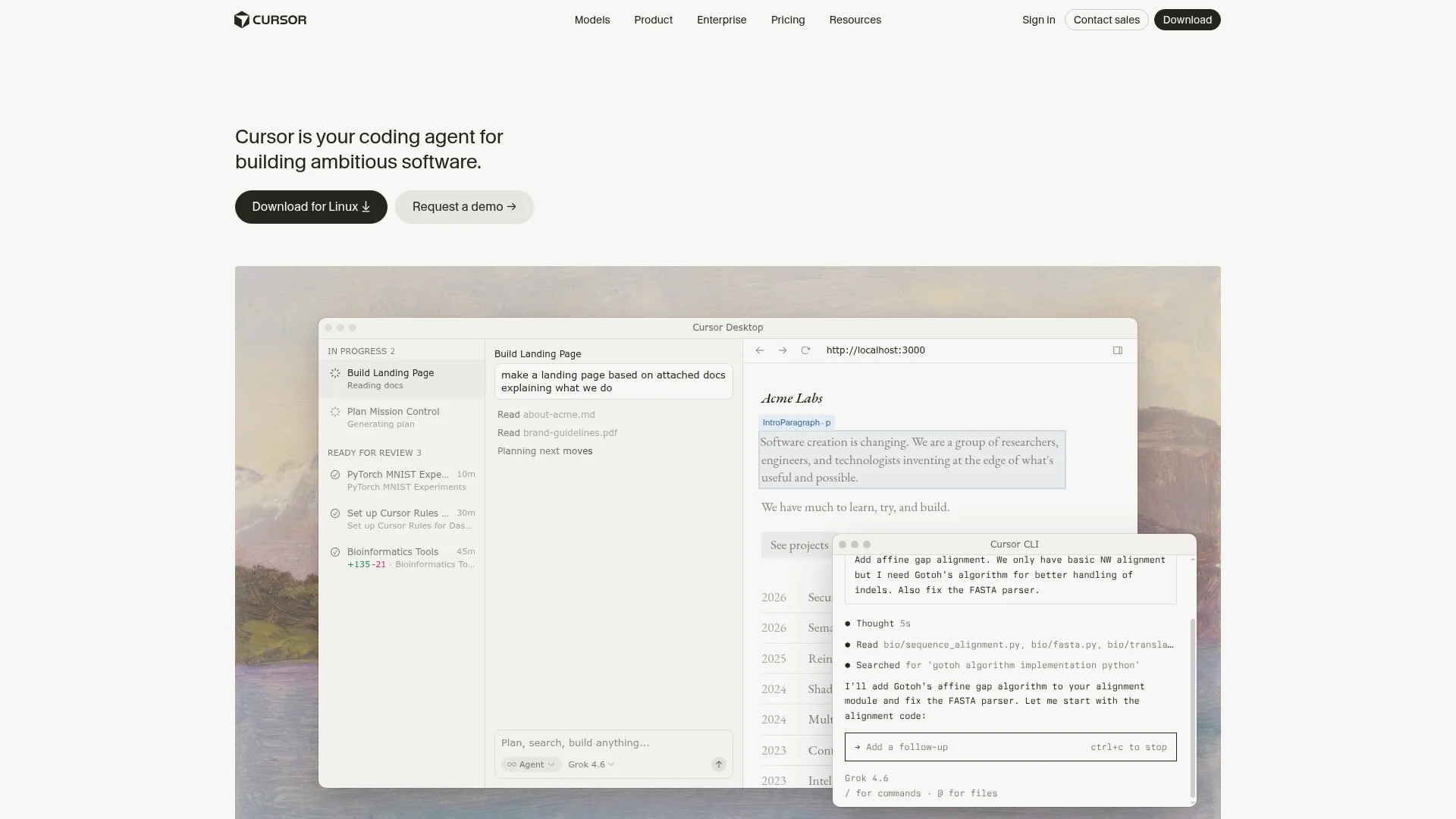
Cursor Automations deploy your agent workflows to the cloud with a single toggle, so a repo you built locally starts running on a schedule.
Cursor started as an AI-first IDE and turned into a platform for shipping agentic work. Automations are the piece that matters for GTM: you write the agent (research, enrichment, outbound draft, whatever), toggle "run in the cloud," and it fires on a cron or a webhook. We wrote a walkthrough of the full pattern in Cursor Automations 101 showing how to wire one up with Firecrawl for live web access.
background agents: Ship an agent to the cloud, keep working locallyscheduled runs: Cron or event-triggered, no separate schedulerlong-running tasks: Handles research and enrichment work that would time out in a chatIDE-native handoff: The agent that ran overnight opens as a pull request in your Cursor windowMCP tools: Same MCP ecosystem as Claude Code, including Firecrawl
Install:
# Download from cursor.com, then enable Automations in Settings → FeaturesExample:
# GTM-shaped automations
"Every morning, pull yesterday's new customers from Postgres, enrich each company info
 with Firecrawl, and post a Slack digest ranked by expansion signal."
"On every new lead in HubSpot, run a research agent and attach the summary as a note."
Honest take: This is the "keep the tools you already have, but run them without you" upgrade. It's especially strong for a lean team where one person is both writing the agent and answering the Slack pings. The cloud runs are cheap enough that we treat them like unlimited cron jobs.
Cons: Cursor is still a paid IDE with paid credits, and Automations pricing is separate. Debugging a failed cloud run requires opening the transcript, which is less ergonomic than logs in a real orchestration tool. Fine for solo GTM ops, less fine for a five-person team sharing state.
Reference: cursor.com.
3. Firecrawl
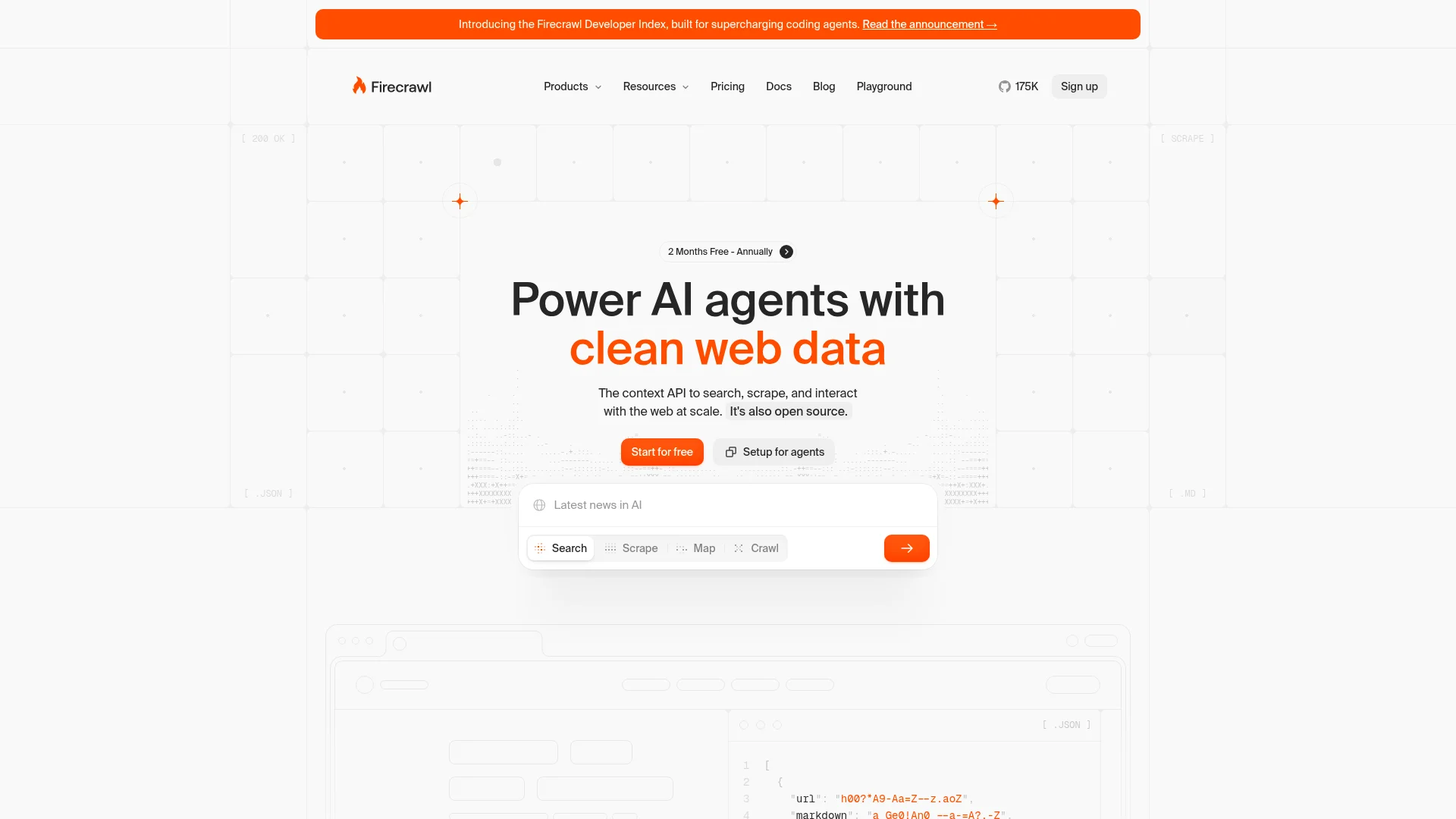
Firecrawl is the web data API to search, scrape, and interact with the web at scale, and it's the data layer sitting under every serious AI GTM stack.
Every "AI SDR" that actually works has a fresh web-data problem underneath it: the prospect's pricing page, yesterday's funding round, a competitor's changelog, a hiring signal from the careers page. Firecrawl handles that layer as a single API.
Search finds the URLs, Scrape returns clean Markdown, Crawl handles whole sites, Parse reads PDFs, Interact drives dynamic pages, and Agent runs autonomous multi-step research end-to-end. It's the context layer for AI agents whenever the answer lives on the open web.
/search: Web search that returns full-page Markdown per result, not snippets/scrape: JS-rendered, proxy-managed, clean Markdown or structured JSON in one call/agent: Autonomous research agent that does search, browse, and extract in one step/parse: PDFs and documents into LLM-ready text/interact: Drives dynamic pages for logged-in scraping and multi-step flowskeyless mode: 1,000 free credits/month, no signup, drop straight into a prototype
Install (MCP):
# Claude Code
claude mcp add firecrawl -- npx -y firecrawl-mcp
export FIRECRAWL_API_KEY=fc-YOUR_KEY

# Cursor: add to ~/.cursor/mcp.json
# {
#   "mcpServers": {
#     "firecrawl": {
#       "command": "npx",
#       "args": ["-y", "firecrawl-mcp"],
#       "env": { "FIRECRAWL_API_KEY": "fc-YOUR_KEY" }
#     }
#   }
# }
Example:
# The GTM-shaped Firecrawl calls I see most often
firecrawl scrape https://prospect.com/pricing --format markdown
firecrawl agent "Find the top 20 Series B fintechs hiring for GTM roles this month"
firecrawl search "companies switching off Salesforce 2026" --sources news
Honest take: Every AI SDR product I've evaluated is doing some version of "search plus scrape plus LLM" under the hood. Building that pipeline in-house is a full-time job (proxies, JS rendering, cost control, rate limits). Firecrawl is what turns "we should build a research agent" into a weekend project. And because it's one of the top 50 most-starred repos on GitHub, the community-built tooling around it is already deeper than most paid platforms.
Cons: It's a data layer, not a full GTM app. You still need to wire it to the CRM, the sequencer, and the model, so budget that integration work or pick a packaged AI SDR if you want those pieces shipped together. That said, adding the Firecrawl MCP to Claude Code, Cursor, or Codex can be super powerful: your coding agent gets live web access as a native tool, and half the "we need to build outbound tooling" work collapses into a few prompts.
Watch Richard Bray walk through how he pairs a Grok bot with Firecrawl to run AI agents that keep working 24/7 while you sleep:
Reference: firecrawl.dev, github.com/firecrawl/firecrawl, and the Firecrawl Developer Index launch for coding-agent-specific retrieval.
4. Clay
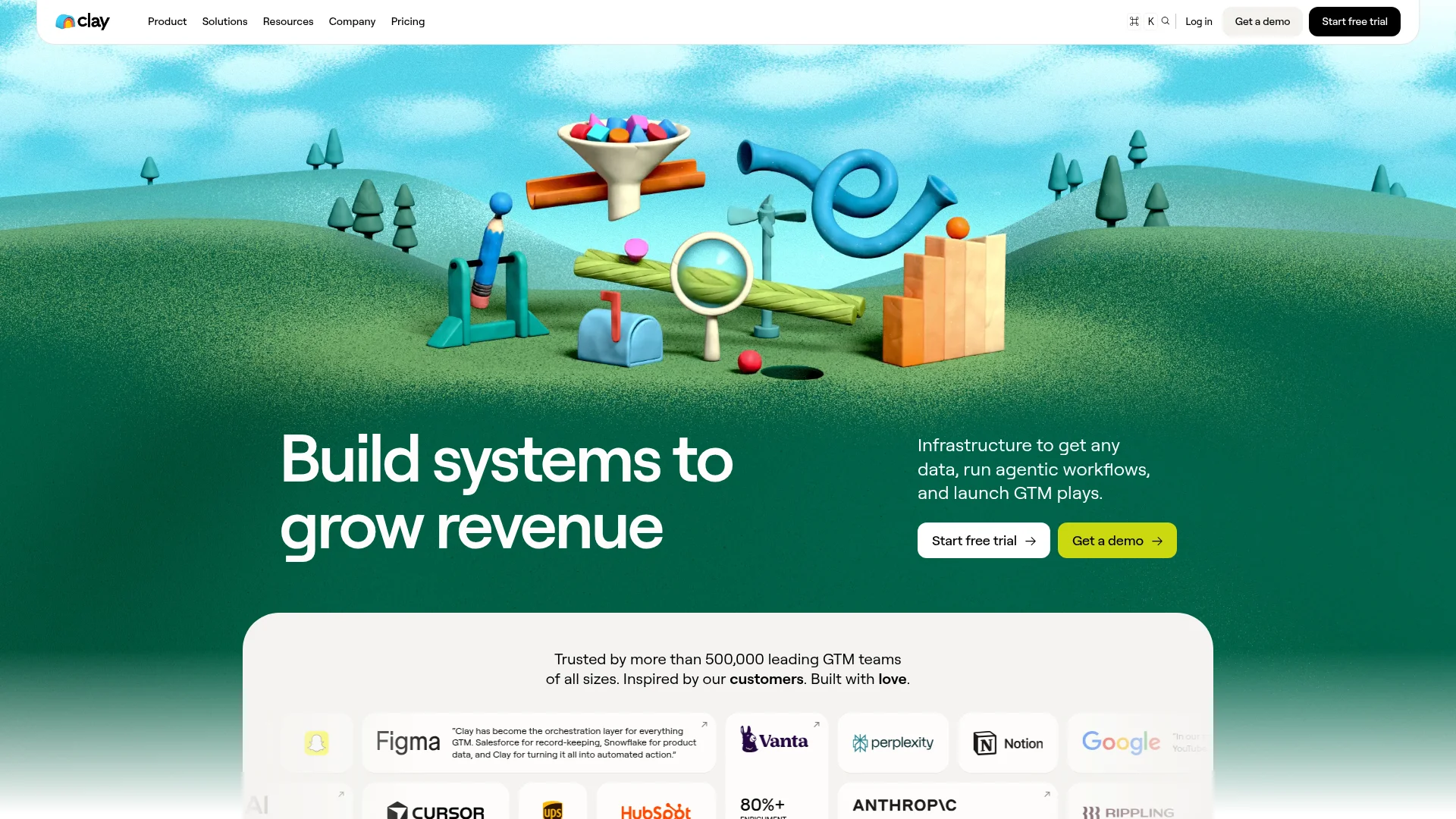
Clay is the go-to-market data platform where you compose enrichment waterfalls across 100+ providers and score signals into an outbound-ready list.
If your GTM motion is "identify accounts showing intent, enrich them, decide whether to reach out," Clay is the tool most revenue teams end up on. Instead of picking a single enrichment provider and living with its gaps, Clay chains them: hit Provider A first, fall back to Provider B if the field is empty, run an LLM step to synthesize what none of them return. That waterfall is the thing that unlocks the rest of the stack.
enrichment waterfalls: Cascade across ZoomInfo, Apollo, Clearbit, and dozens moreAI research: Run an LLM step against any row to research a pain point or find a hooksignal intake: Pipe in web signals, funding events, hiring, job change alertsCRM push: Sync enriched rows straight into HubSpot, Salesforce, AttioFirecrawl integration: Native Firecrawl step for on-demand page scraping inside a table
Install:
# Web-native product, no install. Sign up at clay.com.Example:
# Typical GTM plays
"Enrich this list of 5,000 recent Series A raises and score for ICP fit."
"For every new job listing that mentions 'RevOps', enrich the hiring manager
 and draft a personalized outbound email."
Honest take: Clay is where "signal-based outbound" stopped being a buzzword and became something a real team can operate. The learning curve is real (you're basically building small ETL pipelines in a spreadsheet UI), but once you have one waterfall working, everything else is a variation. Pair it with Firecrawl's Scrape for the pages Clay's native integrations don't cover, and you cover 90 percent of enrichment. For company funding enrichment specifically — a common signal for targeting recently-raised companies — we've independently benchmarked 17 funding data providers on accuracy and freshness.
Cons: Credit-based pricing gets expensive fast if you're enriching millions of rows. The AI research step in particular burns credits, and it's easy to build a workflow that quietly costs $2 per row without noticing. Set budget alerts on day one.
Reference: clay.com.
5. AiSDR
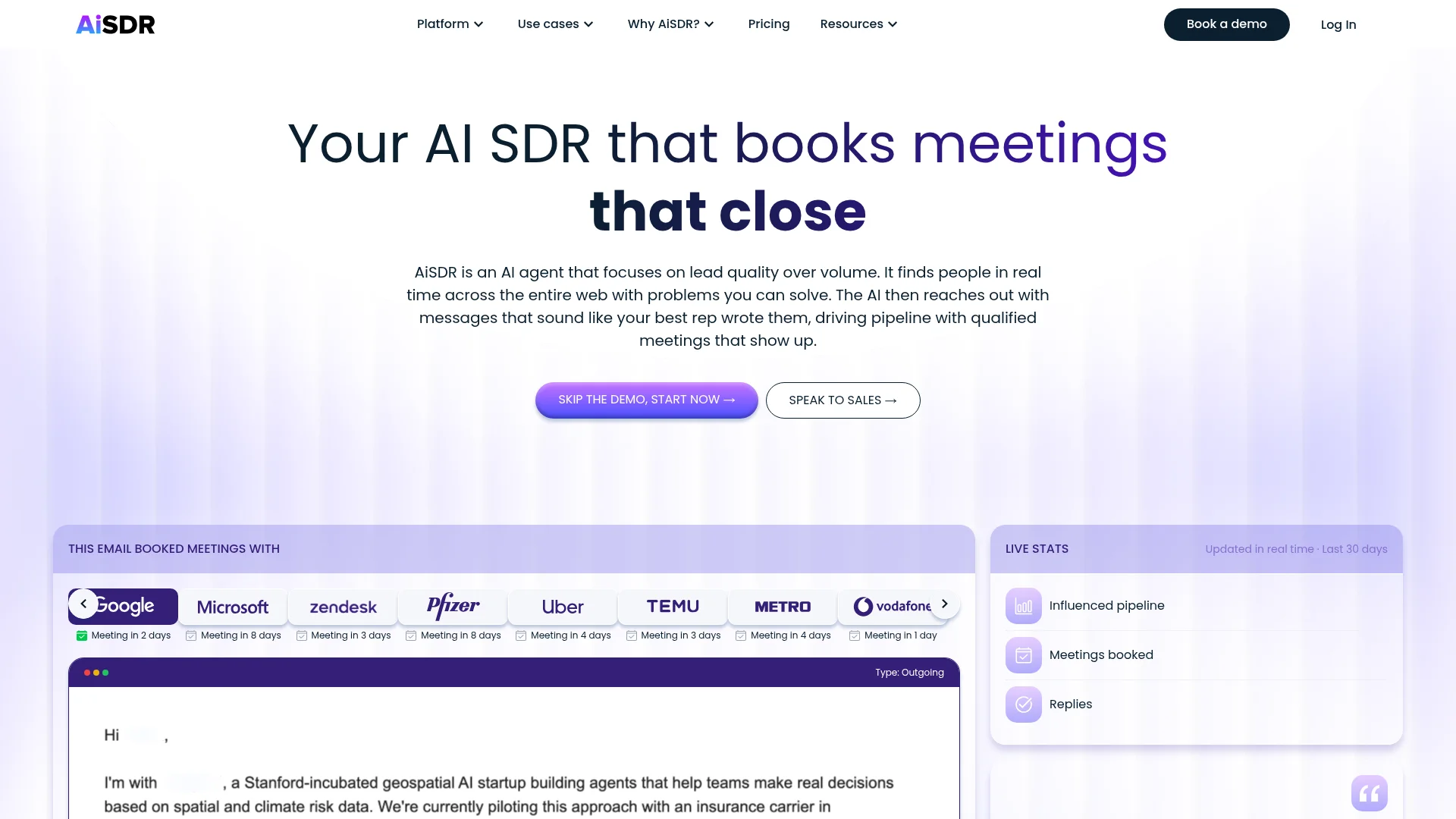
AiSDR is an autonomous AI sales development rep that researches prospects, writes personalized outreach, handles replies, and books meetings.
Where Clay stops at "here's an enriched list," AiSDR runs the outbound motion. It reads the prospect's LinkedIn and website, drafts a message in your voice, schedules follow-ups, and hands off to a human when a reply looks like it's ready to convert. It's the sales outreach automation category most people mean when they say "AI SDR."
autonomous research: Ingests prospect context from LinkedIn, website, and public signalsvoice matching: Writes in your brand voice after ingesting your prior emailsfollow-up sequences: Handles the multi-touch cadence without a separate toolreply classification: Sorts responses into "book a call", "not now", "unsubscribe"CRM sync: Pushes activity back to HubSpot or Salesforce
Install:
# Web product, book a demo at aisdr.comExample:
# GTM plays AiSDR runs end-to-end
"Reach out to every marketing leader at a B2B SaaS company with 50-200 employees
 who raised in the last 90 days."
"Respond to inbound demo requests within 5 minutes with a qualifying question and
 a booking link."
Honest take: AiSDR is closer to "hire a rep" than "buy a tool." The setup is longer (ingesting your voice, ICP, and playbook) and the failure modes look more like SDR failure modes: it can send an email that lands weird if the training data was thin, or over-index on a signal that doesn't matter for your segment. When it's tuned, it clears a lot of pipeline.
Cons: The "voice match" is real but not magic. Any founder who is picky about copy will spend the first month rewriting drafts before letting it send autonomously. Also, like all AI SDRs, deliverability is a moving target: domain reputation, warm-up, and reply-rate optimization are still on you.
Reference: aisdr.com.
6. HeyReach
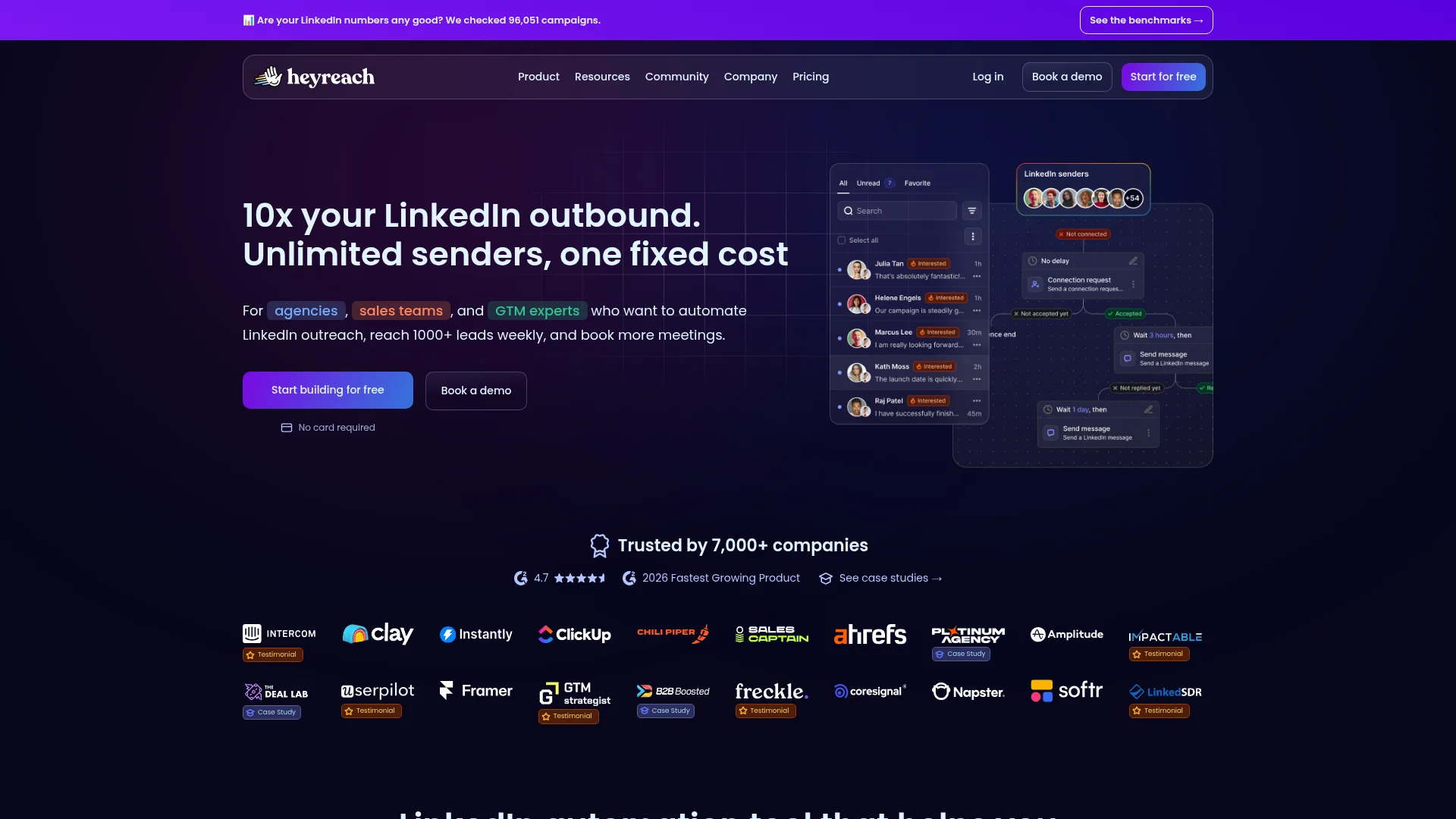
HeyReach is a LinkedIn outbound platform built for agency-scale volume, letting one team run outbound across dozens of sender accounts.
Every serious LinkedIn outbound motion hits the same wall: LinkedIn's per-account rate limits. HeyReach's answer is to rotate across many connected sender accounts with a single cost, so an agency running outbound for a dozen clients (or a big team with a dozen SDR accounts) can scale volume without proliferating tools.
unified inbox: All replies across every sender account in one viewunlimited seats: Flat pricing regardless of sender count, priced for agenciesLinkedIn Sales Navigator integration: Pull prospects straight from Sales Nav searchesA/B testing: Split test messages and rotation strategieswebhook and CRM sync: Push replies into HubSpot, Salesforce, or a custom pipeline
Install:
# Web product, sign up at heyreach.ioExample:
# The agency-scale motion HeyReach is built for
"Run outbound to Series B founders across 15 sender accounts, unified inbox,
 hand off replies to a human within 4 hours."
Honest take: LinkedIn outbound is one of the hardest channels to keep alive at scale because Microsoft actively fights automation. HeyReach handles the compliance and rotation layer better than most competitors, which is why agencies stick with it. If your motion isn't LinkedIn-heavy, this isn't the tool you need.
Cons: The tool is opinionated toward LinkedIn only. You still need something else for email, and integrating both into one cadence requires stitching. Also, LinkedIn's terms of service change often, and any LinkedIn automation carries account-suspension risk. Warm your accounts, respect the limits.
Reference: heyreach.io.
7. Octolens
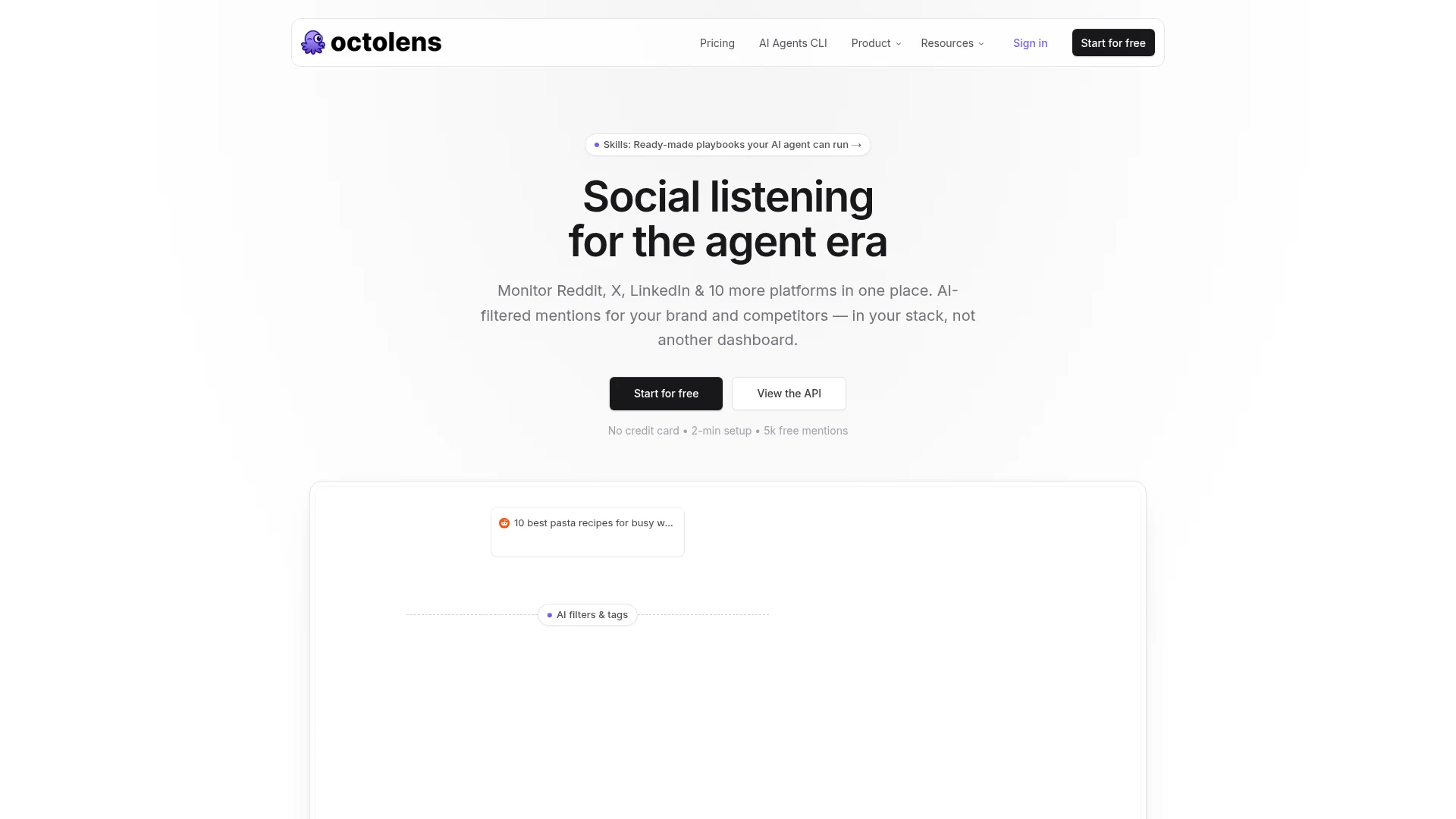
Octolens is AI social listening across Reddit, X, HN, LinkedIn, YouTube comments, and dozens of other platforms, surfacing brand and intent mentions in real time.
Community-driven GTM lives or dies on catching mentions early. Octolens indexes the corners of the internet where prospects actually complain, ask, and recommend, then routes matching mentions into Slack or a dashboard within minutes. The angle that separates it from generic social listening is the AI classification: it filters noise (bots, off-topic hits, mentions of a name-collision company) so what reaches your team is close to signal.
keyword monitoring: Real-time index across Reddit, X, HN, LinkedIn, YouTube, Bluesky, and moreAI classification: Filters false positives, tags intent (question, complaint, recommendation)Slack integration: Native routing to a Slack channel with reply-ready contextsocial listening API: Programmatic access to the same feed for building custom agentsMCP server: Expose Octolens as a tool inside any MCP-compatible agent
Install:
# Web product, sign up at octolens.comExample:
# The Octolens plays revenue teams actually run
"Alert me every time someone on Reddit asks for a competitor of [our product]."
"Surface every HN thread mentioning 'RAG' or 'grounding' with more than 20 comments."
Honest take: Community-led growth stopped being optional once every buyer started researching in Reddit and Slack before ever talking to sales. Octolens is the cheapest way to make sure your team is in the conversation instead of hearing about it three weeks later. The AI classification isn't perfect, but it's the difference between "manageable Slack channel" and "muted inside an hour."
Cons: Value scales with how tuned your keyword list is. Set it up carelessly and you get a firehose of low-signal mentions that trains your team to ignore the channel. Spend the first week iterating on filters before you judge it.
Reference: octolens.com.
8. Supademo
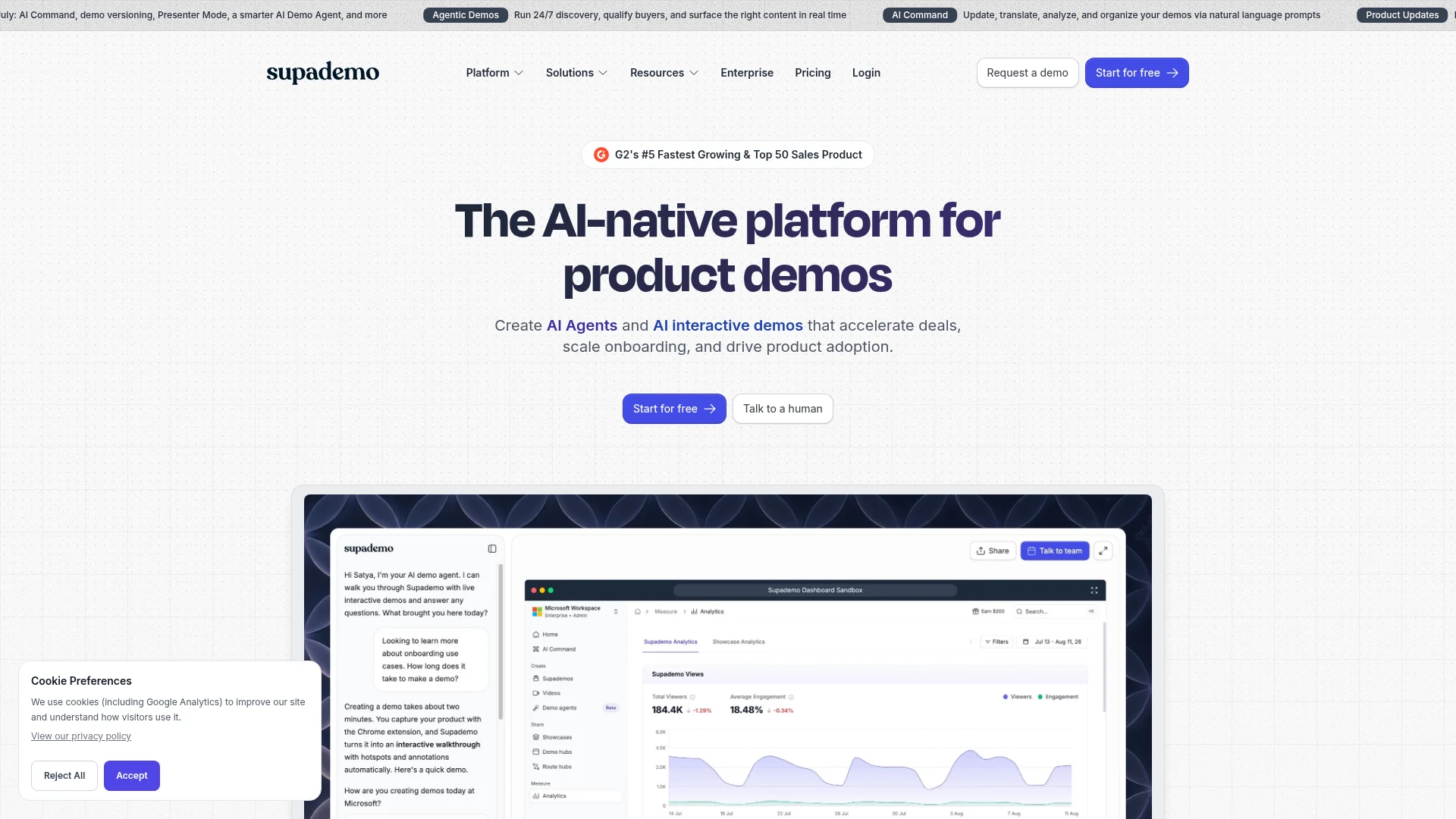
Supademo builds interactive product demos (recorded, annotated, agentic) that let a prospect click through your product before ever getting on a call.
The old demo motion was "book a 30-minute call and I'll share my screen." The new one is "here's a link, click through the product, I'll answer questions after." Supademo builds those interactive walkthroughs from a screen recording, then layers on annotations, branching flows, and (newer) agentic demos that respond to what the prospect actually asks.
interactive recordings: Turn a screen capture into a click-through demo in minutesAI Command: Update, translate, or reorganize demos with natural language promptsagentic demos: Demos that qualify buyers and surface the right content in real timedemo versioning: Ship variants for different personas without duplicating workanalytics: See which steps prospects drop off at, close the loop with sales
Install:
# Web product, sign up at supademo.comExample:
# Typical Supademo use cases
"Build an interactive demo of the onboarding flow for our AE team to send after
 discovery calls."
"Localize this demo into Spanish, French, and Japanese in one shot."
Honest take: Interactive demos are one of the few GTM assets that pay compounding returns: build one, embed it on the pricing page, in outbound emails, and in follow-ups. Supademo's translation and versioning features are underrated for teams selling internationally. The agentic demo is newer and still finding its shape.
Cons: A great interactive demo still needs a real screen recording and a thoughtful narrative. Supademo automates the polish, not the story. Teams that treat it as a shortcut ship demos that look like tutorials, not sales assets.
Here's how Joseph Lee built an AI demo agent that sells 24/7:
Reference: supademo.com.
9. Superhuman
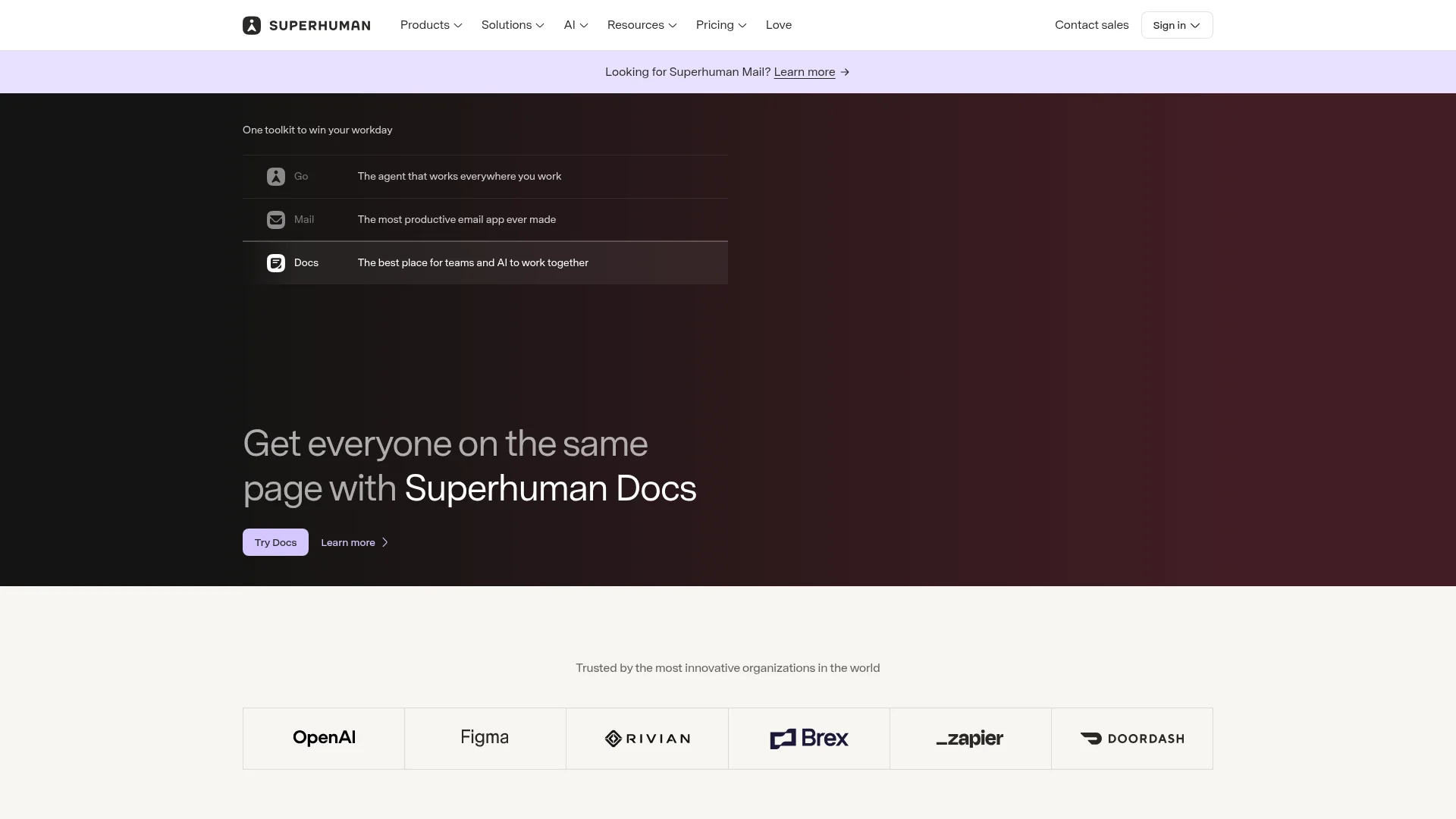
Superhuman is the email and calendar productivity app for people who live in their inbox, now rebuilt around AI (Superhuman Go) that drafts, schedules, and researches from the same window.
Superhuman started as a fast email client. It became a real GTM tool once the AI layer matured: draft replies in your voice, schedule around your calendar, pull context from CRM notes, all inside the same keyboard-driven UI that made it famous. For founders and AEs whose real workday is a triage queue of prospect emails, it's a legitimate hour-per-day back.
Superhuman Go: AI assistant that drafts, replies, and researches from your inboxAgents: Longer-running AI tasks (research, follow-up sequencing) inside the email contextcalendar and scheduling: Native booking links, smart reschedulingDocs and Databases: AI workspace layer for the rest of your workkeyboard-first: Every action has a shortcut, no mouse required
Install:
# Download the desktop app or use the web client at superhuman.comExample:
# The AE workflow Superhuman is built for
"Draft a reply to this prospect using the notes from yesterday's discovery call."
"Move every 'not now' reply into the nurture folder and set a follow-up in 60 days."
Honest take: Superhuman is a splurge that pays off if your job is email. For a founder or AE, the ROI is obvious. For an SDR doing outbound sends (not replies), it's the wrong tool: use HeyReach or AiSDR instead. Know which side of the inbox you're on before buying.
Cons: The price ($30+/month) is high enough to be a real seat-cost line item on a growing team. It also assumes you keep your inbox close to zero; the muscle-memory unlock stops working if you have 12,000 unread emails.
Reference: superhuman.com.
10. Reo.dev
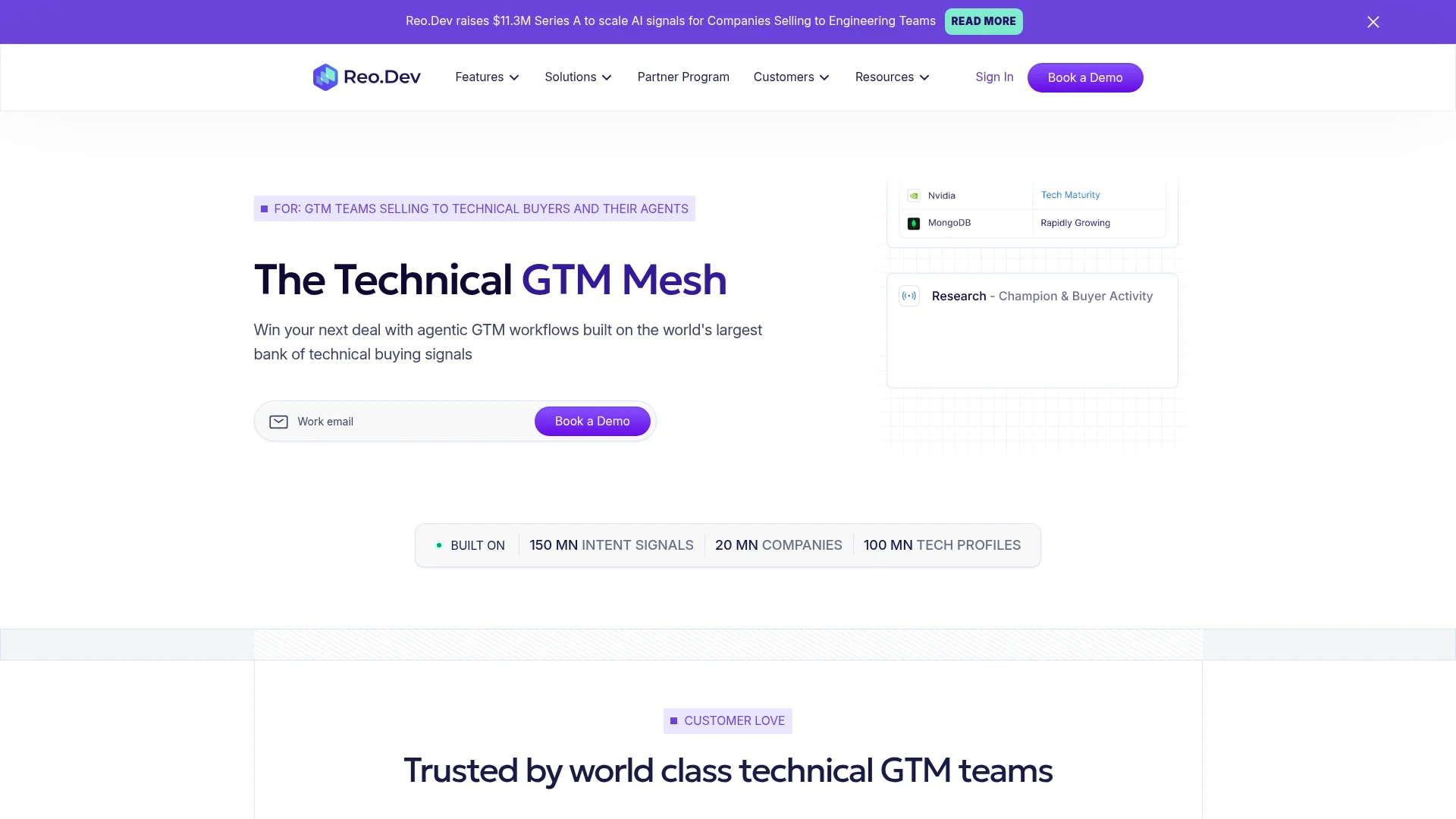
Reo.dev is developer intent capture and account intelligence built specifically for companies selling to developers, deanonymizing sign-ups and predicting which dev accounts are ready to buy.
Standard intent tools (6sense, Bombora, Warmly) miss the signals that actually matter when your buyer is a developer: docs page views, SDK downloads, GitHub star activity, MCP server usage. Reo.dev instruments that layer. It captures behavioral signals from your product, docs, and community, deanonymizes anonymous sign-ups into accounts, and predicts which of those accounts are ready to hear from sales.
developer intent signals: Behavioral capture across docs, product, community, and GitHubsign-up deanonymization: Match email or handle to a real account and teamaccount intel: Enrichment tuned for dev-tool GTM (team stack, hiring, funding)buyer prediction: Score which accounts are pipeline-ready right nowlist enrichment: Uplift a static account list with dev-audience dataagent intent: MCP-shaped signals for AI-agent-driven buyers (a newer wedge)
Install:
# Web product, book a demo at reo.devExample:
# GTM plays for dev-tool teams
"Score every account that hit our docs 3+ times this week and route hot ones to sales."
"Deanonymize the 500 sign-ups from last month and enrich with team size and stack."
Honest take: If you sell to developers, generic intent platforms miss the buyer entirely. A backend engineer starring your repo at 11pm is a stronger buying signal than any traditional intent tool will catch. Reo is the first tool I've seen that treats developer behavior as the primary signal instead of a secondary one. For dev-first companies (Firecrawl included, obviously), it's the closest thing to a purpose-built revenue radar.
Cons: Not the right tool if your buyer isn't a developer. The whole product is optimized for a specific ICP, and the value collapses fast outside it. Also, dev-audience deanonymization depends on the audience actually giving you an email at some point, so a fully anonymous docs audience gives you thinner signal to work with.
Reference: reo.dev.
Building the top AI sales automation tools for GTM into your workflow
The stack that actually works in 2026 isn't "pick one platform." It's a composition.
The winning shape I see most often on revenue teams: Firecrawl or Clay for the data layer, one AI SDR (AiSDR) plus a LinkedIn tool (HeyReach) for the execution layer, an intelligence tool tuned to your ICP (Reo for dev-tools, Octolens for community-led motions), Supademo for the demo asset, and Superhuman for the human at the top of the funnel. Then Claude Code and Cursor for the internal tools that used to be $50k/year SaaS and now cost a weekend.
The custom-tool layer is the one that keeps compounding. Every commercial tool on this list is a good bet today.
But the moment a team gets comfortable vibe-coding their own CRM, enrichment pipeline, or research agent, they stop being locked in to any particular vendor's roadmap. Firecrawl's revenue team is one of many building this way, and the pattern is spreading fast.
If you want to go deeper, our post on reducing LLM hallucinations covers how to keep any of these agents grounded in real data. Our best AI agent frameworks roundup covers what to build them on. And the best low-code AI workflow automation tools roundup is worth a read if your team is more comfortable in a visual builder than a terminal.
That's a great curated list of top AI sales automation tools for GTM to build against, and everything on it composes with everything else.
Frequently Asked Questions
What are AI sales automation tools?
AI sales automation tools handle the repetitive parts of go-to-market work (prospecting, enrichment, outbound sequencing, demo delivery, CRM hygiene) using models that can research accounts, personalize copy, and score intent. Most modern GTM stacks combine a data layer, an execution layer, an intelligence layer, and increasingly a custom-tool layer.
What's the difference between an AI SDR and a normal SDR tool?
A normal SDR tool automates cadences: it sends the emails you write on the schedule you set. An AI SDR researches the prospect, drafts the message, decides the send time, and iterates based on replies. Tools like AiSDR position themselves as an autonomous rep rather than a cadence engine.
Do I still need a CRM if I'm using AI sales automation tools?
Yes, but the shape of it is changing. Revenue teams increasingly wire custom internal tools (built with Claude Code and Cursor) on top of a lightweight CRM primitive, so the stack fits their motion instead of forcing the motion to fit HubSpot or Salesforce.
How does Firecrawl fit into a GTM stack?
Firecrawl is the data layer that feeds every AI SDR, enrichment step, and signal-based outbound play. Search, Scrape, and Agent turn any public URL into clean Markdown or structured JSON, so your GTM agents reason from current web content instead of stale training data.
Are AI sales automation tools free?
Most have a free trial or a limited free tier. Serious usage lands in the $99-$500/month range per seat for point tools, higher for platforms with credit-based pricing (Clay, Firecrawl). Custom-built internal tools cost only the LLM tokens.
Which AI sales tool is the best fit for a technical/developer product?
Reo.dev is purpose-built for developer GTM: it captures developer intent signals from your product, docs, and community, deanonymizes sign-ups, and predicts buyer accounts inside the dev funnel where standard intent tools miss the signal.
Can I build my own AI sales tools instead of buying one?
Yes, and it's the fastest-growing pattern. With Claude Code, a revenue team can vibe-code a tailored CRM, enrichment pipeline, or research agent in under a day. Firecrawl's revenue team built an internal HubSpot clone this way so the CRM matches the actual pipeline rather than the other way around.
How do I choose between all these tools?
Pick one tool per layer of the stack: data (Firecrawl or Clay), execution (AiSDR, HeyReach), intelligence (Reo, Octolens), productivity (Superhuman), demos (Supademo), and custom (Claude Code, Cursor). Adding a second tool in the same layer usually creates more overlap than lift.